Iran Missiles Sink Starmer's £35 Billion Chagos Gamble
Two Iranian missiles exposed the fatal flaw in Starmer's £35 billion plan to hand Diego Garcia's sovereignty to a Chinese-aligned government — and left his government with no deal to defend.
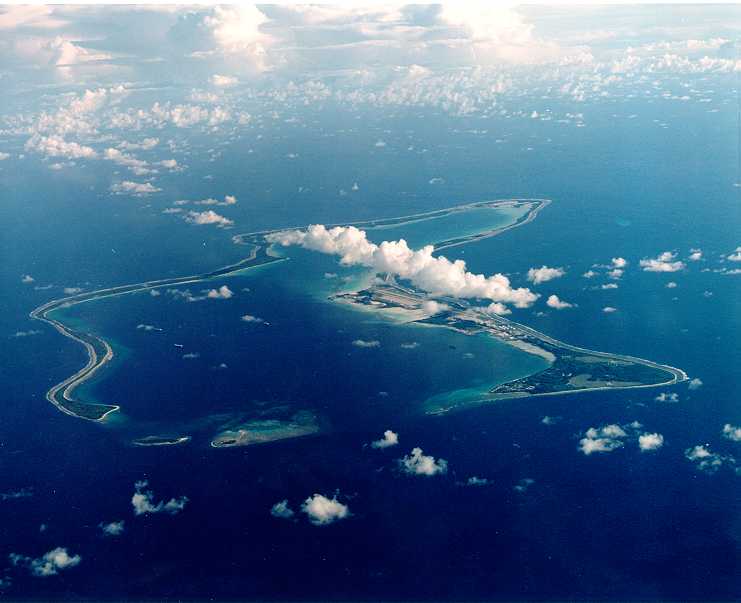
Two Iranian missiles streaked toward Diego Garcia. One was intercepted by a U.S. Navy warship. The attack did more than test defenses — it exposed the fatal weakness in Prime Minister Keir Starmer's £35 billion deal to hand sovereignty of the Chagos Islands to Mauritius.
When missiles can reach a target 2,360 miles from their origin, sovereignty is no relic. It is the only guarantee of survival for critical defense assets.
The political explosion that followed dwarfed the physical attack. The strike rendered the UK's agreement not merely risky, but strategically naive — and delivered a blunt vindication to the one leader who had refused to go along with it. When the UK alerted Mauritius to an impending military operation against Iran, the island nation protested. That single moment proved what President Trump had argued all along: that no lease arrangement can substitute for sovereign control when the shooting starts.
"The U.S. saw this first-hand when the U.K. alerted Mauritius to an impending operation against Iran — an alert Mauritius then protested," said Robert Midgley of Friends of the British Overseas Territories. "This is what prompted President Trump's statement."
The Chagos deal, signed in May 2025, transfers sovereignty of the archipelago to Mauritius while the UK leases back Diego Garcia for 99 years at an average cost of £101 million per year. The agreement was designed to satisfy post-colonial justice while securing the base's operational future.
Instead, it created a geopolitical nightmare. Treaty partners cannot unilaterally change terms — and that bedrock principle now threatens to sink the deal entirely.
Senator John Kennedy of Louisiana introduced the Diego Garcia Oversight Act on March 13, requiring Senate approval for any treaty changes affecting U.S. access to the base. The legislation reflects growing congressional alarm that the UK is transferring sovereign control over critical American military assets without Washington's consent.
"When two countries shake hands on a treaty, one of them can't start changing the terms without the other country agreeing to it," Kennedy said. "That's just common sense. That's why I take issue with the United Kingdom trying to give our joint military base on Diego Garcia to a pal of Xi Jinping's — all without getting the US Senate's consent."
The base, 2,360 miles from Iran, houses approximately 2,500 American personnel and facilities capable of accommodating long-range U.S. bombers.
"There's been speculation before that Iran could be capable of strikes beyond the claimed 1,250-mile limit, they just haven't shown their cards," said Tom Karako of the CSIS Missile Defense Project. "The attack on Diego Garcia would seem to be that moment."
Trump opposed the deal from the start, calling it in January 2026 an "act of great stupidity." In early February, following sustained lobbying from Starmer, he briefly softened — saying it was "the best he could make." He didn't stay softened. On Feb. 18, he posted on Truth Social: "DO NOT GIVE AWAY DIEGO GARCIA!" — adding that leases are worthless when a country's survival is on the line and that Mauritius's claims were, in his view, "fictitious in nature." The Iran strike confirmed the judgment he had refused to abandon.
That statement arrived one day after the State Department announced official support for the agreement — a contradiction that sent immediate confusion through London, where the government had already scheduled debate on the Chagos bill in the House of Lords.
Foreign Office Minister Hamish Falconer told Parliament on Feb. 25 that ratification was "paused for discussions with our American counterparts." Hours later, the Foreign Office issued a denial that any formal pause had occurred.
"We are pausing for discussions with our American counterparts," Falconer said.
The government then insisted no decision to pause proceedings had been made. The reversal left Starmer's administration looking disorganized and politically exposed as opposition parties mobilized against the deal.
Reform UK leader Nigel Farage had been making the strategic case for months. "Outside of America itself, Diego Garcia is the most important base you've got in the whole world," Farage said on March 6. He warned that handing sovereignty to Mauritius meant handing influence to Beijing.
"If Trump initially had problems with the Brits over using the base, just think what it will be like with the heavily Chinese-influenced Mauritians," Farage said.
The deal now sits in legislative limbo. The Chagos bill remains in the House of Lords with no debate date scheduled, and the UK government states it will not proceed without U.S. support.
Starmer has defended the deal as the only path to guaranteeing the base's long-term future. The missile attack demolished that argument. When sovereignty transfers to another nation, the lease that follows depends entirely on that nation's goodwill — and its political calculations. Mauritius protesting a military operation mid-crisis was the real-world test of that theory. It failed.
While governments debate the base's fate, four Chagossians established a settlement on Île du Coin on Feb. 17. The indigenous population was forcibly evicted in the 1960s and '70s to clear the way for the base — a genuine historical injustice that the deal's architects used to justify their concessions.
"I am not in exile any more. This is my homeland," said Misley Mandarin, who led the landing party.
The settlement remains in place as of March 23. The Chagossians' grievance is real. But redressing a colonial wrong by handing a strategic asset to a Chinese-aligned government, under a lease that cracks the moment it is tested, is not justice. It is a different kind of recklessness.
In a world where adversaries can reach targets 2,360 miles from their borders, sovereign control is not a diplomatic nicety. It is the hard foundation on which military assets either stand or fall. The Iran strike proved that no lease arrangement, however carefully worded, can substitute for it.
The Chagos deal — built to balance post-colonial sentiment with security imperatives — has collapsed under the weight of geopolitical reality. Starmer's government cannot defend it. Trump's opposition has been vindicated. Congress is moving to assert its own authority over the agreement's terms.
The base remains operational. The deal does not.