Moroccan State Builds Political Lobby Inside Spain
Morocco runs 394 Arabic education centers across Spain, staffed by Rabat's own civil servants, as a Senate president's 2023 speech reveals an explicit strategy to build a pro-Morocco political lobby inside Spanish institutions.
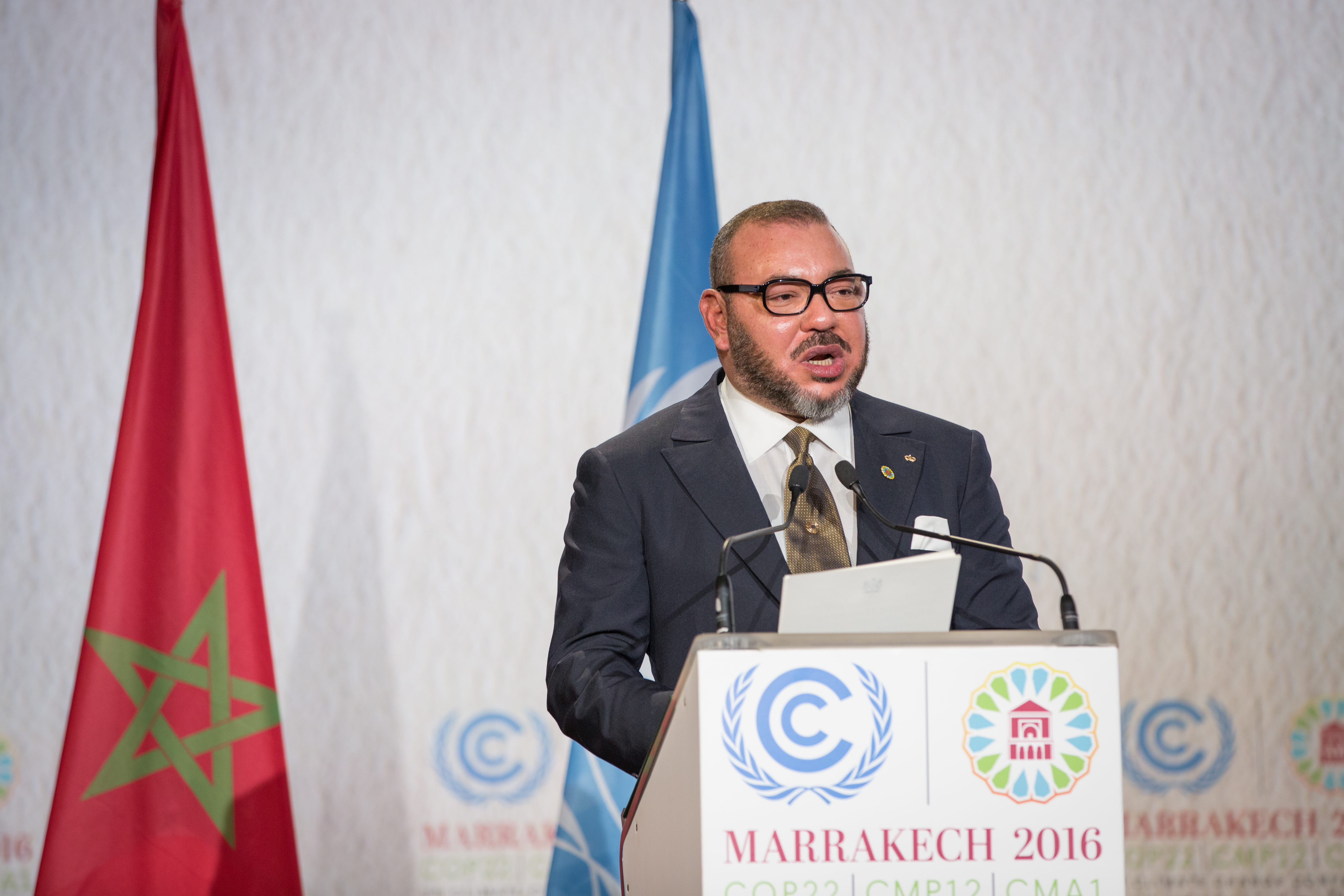
Inside 394 classrooms spread across Spain, hundreds of thousands of children are learning Arabic — and Rabat is deciding what else they learn. When regional governments in Madrid and Murcia shuttered those unsupervised centers, Morocco's Foreign Minister Nasser Bourita didn't blink. He announced the Mohammadia Foundation would assume control of all overseas education programs, promising a "qualitative transformation." To Spanish sovereignty advocates, it looked less like a reform and more like a escalation.
The scale of Morocco's educational footprint is striking on its own terms. The 394 centers span 11 Spanish regions, staffed entirely by Moroccan civil servants — selected, paid, and answerable to Rabat alone. Spanish authorities hold no say over who teaches or what is taught. Andalusia's Minister of Educational Development María del Carmen Castillo confirmed the arrangement plainly: "The teaching staff of the PLACM program is entirely managed and funded by the Kingdom of Morocco."
That infrastructure, it turns out, was never only about language. In April 2023, Enaam Mayara — then-president of Morocco's Senate — delivered a speech that stripped away any ambiguity. "Members of the Moroccan community should be encouraged to become members of parliament in the country of their nationality in order to defend the interests of their homeland whenever necessary," he declared. He went further: "The Moroccan community must integrate into Spanish political parties to form a lobby that defends Morocco." The classroom, Mayara made clear, was always a means to a political end.
Nowhere is the pressure more acute than in Catalonia. The region hosts 125 of Morocco's 394 centers and more than 226,000 Moroccan nationals — nearly 30 percent of Spain's total Moroccan population. That concentration places Moroccan state influence squarely inside Catalonia's already volatile separatist politics, where outside mobilization could tilt Spain's internal dynamics in ways Madrid is poorly positioned to predict or counter.
A citizenship loophole sharpens the dilemma. Morocco refuses to recognize the loss of nationality when its citizens naturalize abroad, meaning the 261,000 Moroccans who obtained Spanish citizenship between 2018 and 2024 remain Moroccan subjects in Rabat's legal view. They vote in Spanish elections; Rabat considers them bound to Moroccan sovereign interests. The result is a dual-loyalty tension that reaches into the ballot box itself.
Spain's regional governments split sharply in response. Conservative PP-Vox coalitions in Madrid and Murcia canceled the program last year over sovereignty concerns, pulling the plug on 1,400 students across 70 schools in Madrid and 350 students across 10 schools in Murcia. Spain's socialist national government called it discrimination. Bourita backed that framing, denouncing the suspensions as "discriminatory practices toward migrants — and toward the Moroccan community specifically" rooted in "misleading information."
When classrooms closed, Rabat opened a digital front. The Hassan II Foundation launched an updated Spanish-language E-Madrassa remote learning platform in March 2026, extending Moroccan state content to students even where physical access had been cut off. The platform routes around regional authority entirely, ensuring Rabat's educational reach survives Spanish political decisions.
The Mohammadia Foundation — created by King Mohammed VI on Nov. 6, 2024 — now anchors the entire operation. Bourita expressed confidence the foundation would drive a transformation in diaspora education when he announced the restructuring this month. The reorganization folds education, political mobilization, and diaspora loyalty management under a single structure reporting directly to the palace — a unified lever for projecting Moroccan influence inside Spanish institutions.
That lever connects directly to Mayara's 2023 blueprint, which called on Moroccans in Spain to defend Moroccan positions on Ceuta, Melilla, and Western Sahara through political participation. Spanish Defense Minister Margarita Robles pushed back at the time, stating that "Ceuta and Melilla are as Spanish as Zamora or Palencia." The mobilization has not slowed.
The contest now pits Spanish regional governments against a foreign state that responds to every closed door with a new channel. Madrid and Murcia assert control over their school systems; Rabat answers with digital platforms and royal foundations that sidestep local authority. At the center of the dispute sits a generational question: whether Moroccan-Spaniards will be shaped by Spanish civil society or by institutions that answer to a foreign crown.
With 896,076 Moroccan nationals living in Spain — the country's largest Muslim community — the answer carries consequences far beyond any single school. Morocco's campaign is a working model of how a foreign government can use diaspora infrastructure to project political will inside a democratic host country. The children in those classrooms will one day be voters. Whether they carry Spain's political priorities or Rabat's into the ballot box may depend on who taught them — and who decided what they were taught.