China Tightens Gray-Zone Stranglehold on Taiwan
China's methodical gray-zone campaign pressures Taiwan through naval encirclement and economic coercion while exploiting Western divisions, raising stakes for global semiconductor supply chains and democratic norms.
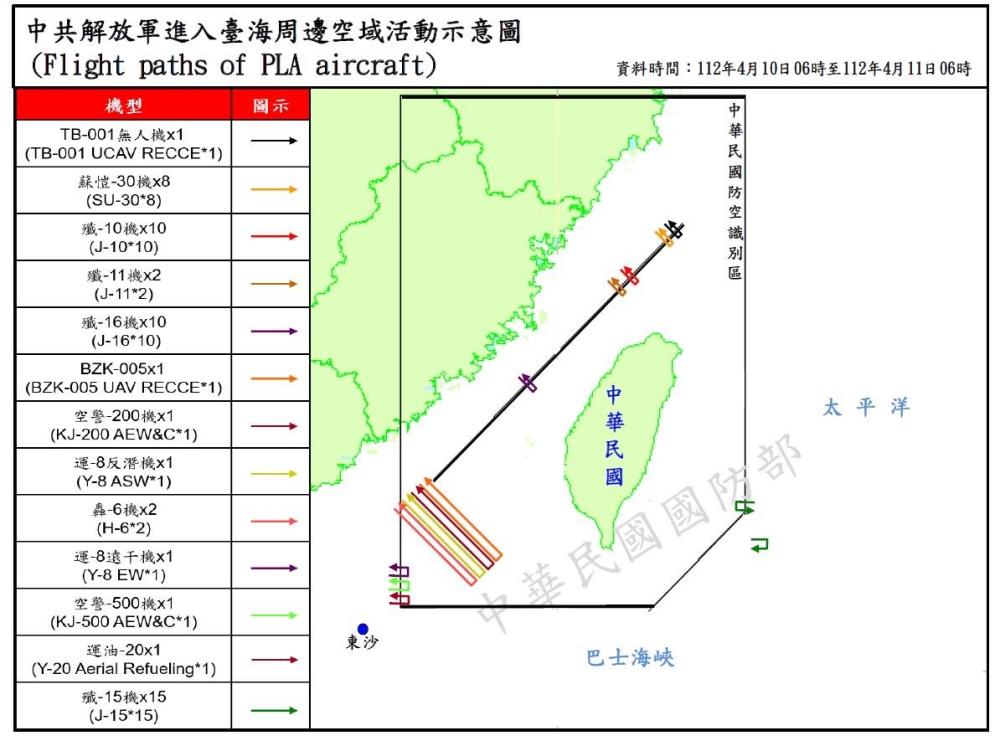
China is tightening a methodical campaign to suffocate Taiwan's sovereignty and strangle its economy without firing a shot. While European allies finally coordinated their condemnations on June 24, Beijing pressed forward with near-continuous naval encirclement, legal coercion, and diplomatic isolation. The strategy exploits Western divisions and targets ordinary Taiwanese who live under the steady weight of economic strangulation.
The Chinese Communist Party has moved beyond showy military exercises toward relentless pressure aimed at isolating Lai Ching-te's government politically rather than through force. PLA aircraft violations of Taiwan's air defense identification zone surged from 972 in 2021 to 3,615 in 2024, then climbed to 3,764 in 2025. Daily incursions have since settled at an average of five in early 2026.
Beijing swapped military posturing for coast guard patrols, journalist expulsions, and economic sanctions targeting businesses tied to the ruling Democratic Progressive Party. The shift reflects a long-term strategy of attrition, designed to gain control gradually while sidestepping direct confrontation.
"The more realistic and more dangerous scenario is China gaining indirect control over Taiwan through coercion — a 'quarantine,' a blockade, a political crisis that ends with Taipei accepting Beijing's terms," said Eyck Freymann, Hoover Institution fellow and author of "Defending Taiwan."
Jeremy Chan, senior analyst at Eurasia Group, stated Beijing's true aim is political rather than military. "What Beijing really wants is for Lai to lose at the ballot box in Taiwan's next election in 2028," Chan told the Straits Times.
For years, Western institutions responded to Beijing's incremental pressure in fits and starts. That changed on June 24, when the United Kingdom, France, and Germany issued a joint statement condemning Chinese activity east of Taiwan as threats to "regional stability and the freedom of navigation." The United States issued a separate statement echoing similar concerns.
"This shows these nations are increasingly attuned to the CCP's growing military threat against Taiwan," analyst Xie told The Epoch Times. "Stepped-up PLA patrols around the Taiwan Strait could have serious repercussions for Indo-Pacific security."
The Western statement arrived just three days before China and Russia launched their 11th joint strategic air patrol on June 27. More than 15 aircraft operated across the Pacific, prompting interceptors from Japan and South Korea to scramble. The maneuver demonstrated Beijing's ability to expand its gray-zone theater while testing allied responses.
Lin Ting-hui, former deputy secretary-general of the Taiwan Society of International Law, warned China would escalate tactics. "China will go beyond mere maritime patrols, escalating to the intimidation and even expulsion of civilian vessels," Lin told The Epoch Times.
The delay of a $14 billion arms package now undermines the deterrence allies demand. The Trump administration approved 36 percent more arms sales to Taiwan than Biden's entire four-year term, yet President Trump called the package a "negotiating chip" after his May summit with Chinese leader Xi Jinping.
The stakes extend far beyond Taiwan's sovereignty to global economic stability. Taiwan Semiconductor Manufacturing Company produces roughly 90 percent of the world's most advanced semiconductors. Center for Strategic and International Studies analysis estimates a maritime blockade could cause $2 trillion in global economic losses during the first year.
Public concern mirrors the urgency. A Reagan Institute survey released June 30 found 74 percent of Americans are worried China could take Taiwan by force. The poll also showed 66 percent believe Taiwan's security matters to the United States, with stronger concern among Republicans at 72 percent versus 62 percent among Democrats.
China keeps at least four warships on rotating 24-hour schedules around Taiwan's eastern, southern, and northern waters. The sustained encirclement represents what Taiwan's Navy Commander Admiral Tang Hua calls an "Anaconda Strategy" – tightening pressure gradually to isolate Taiwan economically and politically without triggering military confrontation.
Beijing's approach thrives on Western divisions and contradictions. While European allies finally sound alarms, the delayed $14 billion arms package signals to Beijing that Western red lines remain negotiable. China's growing precision weapons inventory and deepening military cooperation with Russia create a strategic environment where incremental gains accumulate into de facto control.
"Taiwan's long-term challenge is larger than responding to individual incursions," wrote Bonnie Yushih Liao in a Taipei Times editorial. "It is to prevent persistent 'gray-zone' pressure from gradually redefining the everyday practice of maritime governance before those changes become accepted as the new normal."
China's methodical approach combines legal warfare, economic coercion, and military posturing below the threshold of war. Beijing passed 18 new foreign affairs laws since 2012, with the most potent measures like the 2023 Foreign Relations Law emerging in recent years. These legal tools provide justification for escalating pressure.
The Taiwan Strait crisis reveals fundamental questions about Western resolve and strategic coherence. As China perfects gray-zone tactics, the democratic world struggles to mount a unified defense against the incremental erosion of sovereignty. The outcome will determine not only Taiwan's future but the credibility of international norms against coercive expansionism.