American Soccer Dream Dies in Seattle After Belgium Rout
A 4-1 defeat by Belgium eliminates the US from the World Cup on home soil, extending a pattern of knockout-stage failures despite massive investment and star talent.
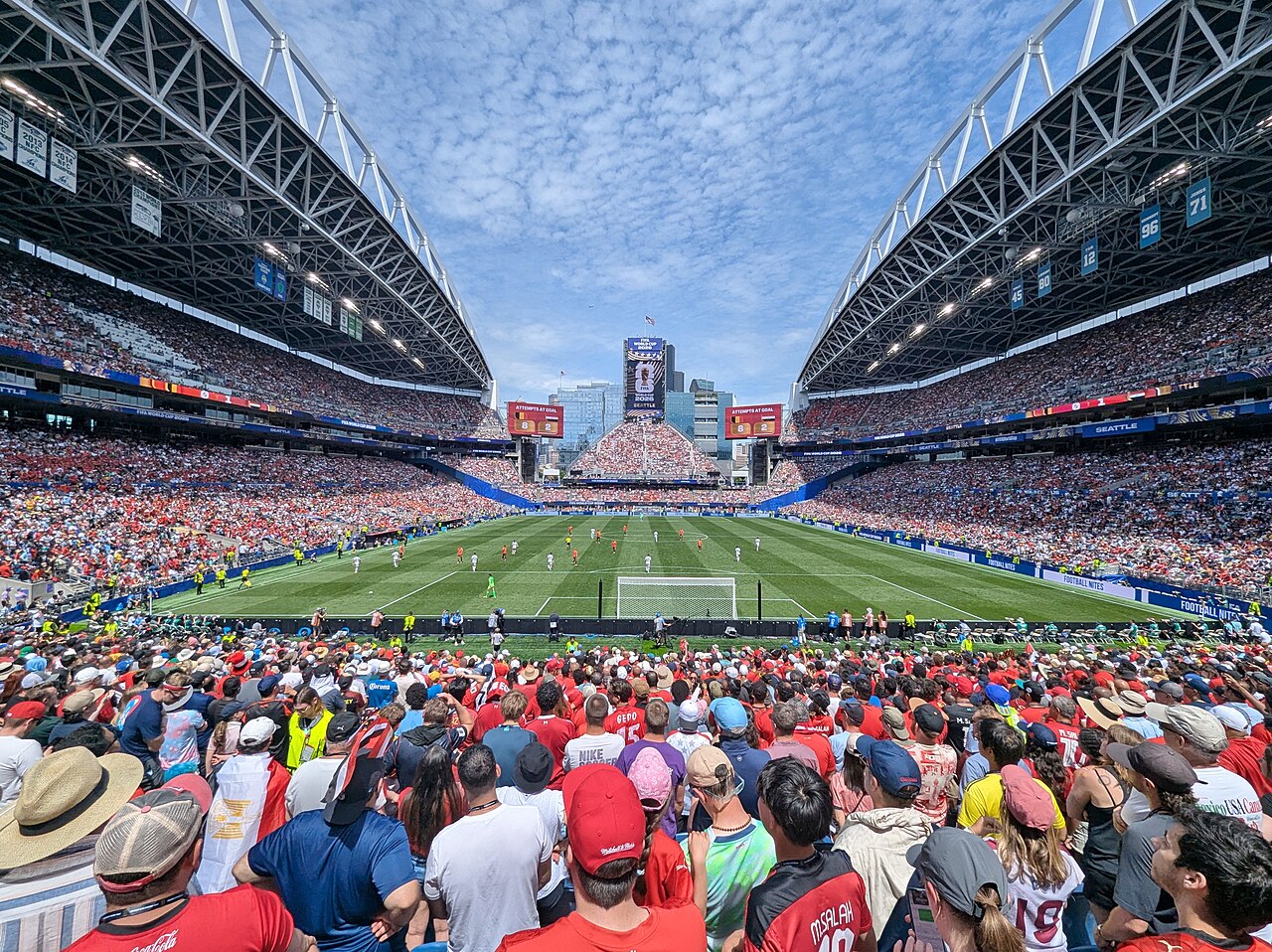
The American soccer dream ended in Seattle on Monday night. Belgium dismantled the United States 4-1, exposing the same flaws that have haunted a program built on promises of transformation and deliveries of familiar disappointment. The U.S. hosted the World Cup with one of the world's best players in its lineup. It could not last 90 minutes against a nation ranked eight spots above it in the FIFA standings.
Belgium controlled the Round of 16 match before 66,925 fans packed into Lumen Field. The United States Men's National Team fell from the 2026 FIFA World Cup, marking the fourth time in five tournaments that it has stalled at the Round of 16. Home-field advantage meant nothing. All three host nations—the United States, Canada, and Mexico—were eliminated at this stage. Christian Pulisic's presence did not alter the arithmetic of American underperformance.
Charles De Ketelaere broke the deadlock in the ninth minute. The Belgian forward tapped in a Leandro Trossard cross that had bounced off a defender before Timothy Castagne delivered it home. Malik Tillman restored parity in the 31st minute, his deflected free kick slipping past the Belgian goal. De Ketelaere answered two minutes later, rising to head home a Castagne cross over Tim Ream. Hans Vanaken punished goalkeeper Matt Freese's error outside the penalty area in the 57th minute. Romelu Lukaku sealed the result in stoppage time, his 93rd international goal.
The numbers confirmed what the eye test already showed. The United States held 51 percent possession and completed 483 passes, yet registered only seven shots with two on target. Belgium fired 15 shots, seven on target, generating 10 attempts inside the penalty area against a disorganized American defense.
"Belgium deserved to win the game. Clearly," midfielder Tyler Adams said. When asked whether any American player had been a major presence on the field, Adams replied bluntly: "Not at all."
The match unfolded against a backdrop of political controversy that had consumed headlines for days. FIFA's disciplinary committee suspended star striker Folarin Balogun's mandatory one-match red card suspension on July 5, just 24 hours after President Donald Trump called FIFA President Gianni Infantino to request a review. The decision, citing Article 27 of FIFA's disciplinary code, allowed Balogun to start against Belgium despite his red card against Bosnia and Herzegovina on July 1.
Balogun acknowledged a yellow card "would have been fair" for the incident. The reversal nonetheless triggered international condemnation. "The controversy swirling around the team had no impact," defender Tim Ream insisted. "We were fully focused on us as a group and as a team and fully focused on the game."
European football authorities condemned FIFA's intervention as a breach of sporting integrity. UEFA labeled the decision "unprecedented, incomprehensible and unjustifiable," stating FIFA "crossed a red line." The Royal Belgian Football Association vowed to "investigate all potential options" and "continue to fight" what it described as a violation of fair play.
Belgium coach Rudi Garcia mocked the timing. "I didn't know that in the offices of FIFA the fifth of July was the first of April in Europe." England coach Thomas Tuchel questioned where such interventions could lead. "Who overturns this decision then, and when? And on what grounds?" Tuchel asked. "How far does this go now? This is strange for me."
The American performance offered no excuses, political or otherwise. "We don't need to find another excuse," coach Mauricio Pochettino said. "I think we were not good enough. It wasn't our day." Pulisic twisted his ankle and knee in the 52nd minute and left the field in the 59th. "I'm disappointed with myself, of course," the American star said. "I didn't quite have the moments I was hoping to and to try to help us to really push and get over this next step of beating a really good team."
Pochettino, whose contract expires after this tournament, declined to discuss his future. "Now is not a moment to talk about that," he said. "I think now is a moment to see, to assess the tournament."
The loss extends a dismal record that reveals American soccer's structural limitations. The United States has not advanced past the Round of 16 since 2002 and has lost 11 of its last 12 games against European opponents. Its best World Cup finish remains third place in 1930, when the tournament featured just 13 teams. The United States has beaten Belgium only once, in that 1930 World Cup, and has lost every matchup since then. That includes a 5-2 friendly defeat in Atlanta on March 28.
FIFA's credibility faces mounting scrutiny beyond the American elimination. Former FIFA President Sepp Blatter warned on the social media platform X that "Red cards are not overturned by political phone calls. They are overturned by rules, evidence and independent bodies." Infantino acknowledged receiving Trump's call but stated FIFA's judicial bodies operate independently. "I explained that there was an ongoing legal process involving FIFA's independent judicial bodies and that the case would be decided in due course by the competent bodies," Infantino said.
The Royal Belgian Football Association's appeal was rejected. FIFA asserted Belgium had no standing to challenge the decision. Whether Belgium can pursue further action at the Court of Arbitration for Sport remains unresolved. European football leaders warn the precedent has damaged institutional trust.
For American soccer, the Seattle collapse represents more than one bad night. It confirms a pattern of mediocrity that endures despite massive investment, home advantage, and individual talent. The United States controlled possession but created nothing meaningful. It possessed the world's best player, watched him become injured and ineffective, and hosted the tournament only to exit alongside fellow hosts at the first knockout hurdle.
As European authorities question FIFA's independence and Belgium prepares to face Spain in Friday's quarterfinal, American soccer faces another cycle of introspection. The gap between ambition and achievement remains as wide as the four-goal margin in Seattle. No political call can bridge it. No amount of home-soil pride can substitute for the quality this team still lacks. The American fans who filled Lumen Field will have to wait another tournament for hope.