Strait of Hormuz Crisis Lays Bare China's Strategy to Weaponize Energy Supply Chains
The Strait of Hormuz crisis revealed how China spent decades positioning itself to weaponize global supply chains, leaving American families and industries vulnerable to Beijing's strategic coercion.
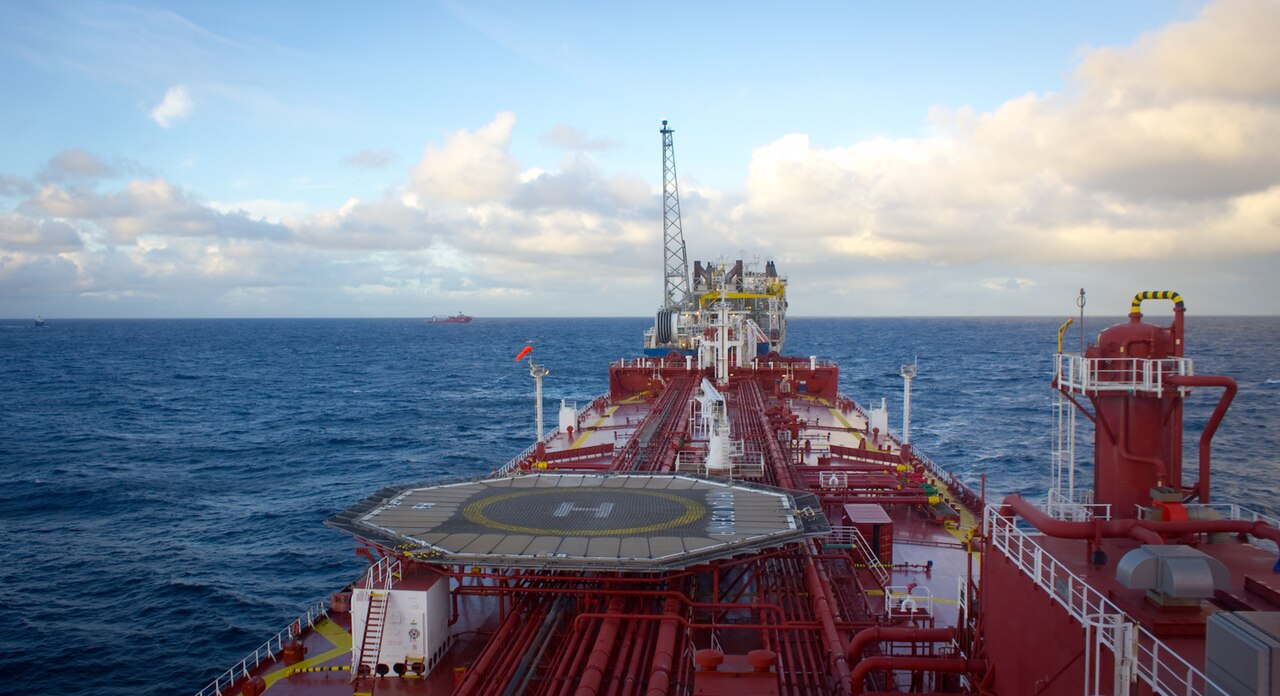
When Iranian forces closed the Strait of Hormuz in March 2026, sending crude oil prices surging to nearly $115 per barrel, Chinese factories kept running. The disruption that plunged households and businesses across Asia and Europe into energy insecurity exposed Beijing's calculated strategy to weaponize global supply chains and turn Middle East chaos into a manufacturing advantage.
U.S. and Israeli joint military airstrikes on Iran on Feb. 28 triggered the crisis. Iranian forces closed the strait on March 8, cutting off roughly a fifth of the world's crude oil supply. By April 7, the price shock rippled through global markets, creating acute energy insecurity. China entered the turmoil insulated by massive strategic reserves, positioned to exploit the disruption while Western nations scrambled for energy security.
Beijing stockpiled 1.206 billion barrels of oil as of January 2026 — enough to cover 104 days of net crude imports at 2025 levels. The nation imported a record 11.6 million barrels of crude per day in 2025, adding 430,000 barrels daily to reserves while deepening reliance on sanctioned suppliers including Iran and Russia.
"With 1.4 terawatts of operating renewable capacity already online and a reported 90-110 days of crude import cover in reserve, China weathered the initial shock better than any regional peer," according to an Asia Group report published June 29.
The crisis accelerated China's clean energy export surge. Chinese electric vehicle exports rose 50 percent year-over-year in May 2026 to a record $9.2 billion. Solar shipments to the Philippines topped 4,000 megawatts in the first four months of 2026, making the Southeast Asian nation China's second-largest solar export market. Chinese photovoltaic cell exports to the United States surged 346 percent year-over-year in May 2026 to $39.96 million.
"Ultimately Beijing views the pain points not as existential threats, but as challenges to be managed and even opportunities to be exploited," the Asia Group report concluded.
That exploitation rests on manufacturing dominance that creates structural vulnerabilities for American energy security. China produces 98 percent of solar wafers, 92 percent of cells, and 85 percent of panels globally. It controls 60 percent of global rare-earth element production and 90 percent of refining capacity. The U.S.-China Economic and Security Review Commission warned in its 2025 annual report that Beijing could weaponize America's reliance on Chinese critical mineral processing during future geopolitical confrontations.
Beijing formalized that threat in March 2026 with State Council Order No. 834, unifying export controls, investment screening, data security, and counter-sanctions into a single national security framework. The Andersen Institute analysis notes China's export control regime "has evolved from a relatively fragmented administrative function into a central instrument of national-security policy."
Washington responded with legislative and industrial countermeasures. The DOMINANCE Act passed the House on June 8, 2026, codifying U.S. participation in the Forum on Resource Geostrategic Engagement and establishing a Bureau of Energy Security and Diplomacy at the State Department. The administration launched Project Vault, a $12 billion initiative to establish a strategic reserve of critical minerals.
Vice President JD Vance convened a Critical Minerals Ministerial in February 2026, announcing preferential minerals trading zones with price controls. At least 146 new solar and storage manufacturing facilities have come online in the United States in recent years as part of this industrial push.
"Nations that control the next generation of energy infrastructure will have real economic, industrial, and diplomatic leverage for decades to come," said Alexander B. Gray, a nonresident senior fellow at the Atlantic Council and former White House National Security Council chief of staff. "America cannot afford to become strategically dependent on Beijing for technologies tied to its electric grid, industrial base, transportation systems, or critical infrastructure."
The U.S.-China Economic and Security Review Commission documented Beijing's explicit strategy, quoting Chinese President Xi Jinping's 2020 directive: "We must sustain and enhance our superiority across the entire production chain in sectors such as high-speed rail, electric power equipment, new energy, and communications equipment... and tighten international production chains' dependence on China, forming a powerful countermeasure and deterrent capability."
Energy analysts argue the solution lies in domestic renewable production. "Wind and solar cannot be embargoed, blockaded, or shut off by a foreign power," said David Frykman of Norrsken VC. "Every terawatt-hour of domestic renewable generation is a terawatt-hour that no adversary can weaponize."
The Strait of Hormuz crisis revealed a fundamental shift in energy security. Traditional measures of naval power and pipeline access now compete with control over critical mineral supply chains and manufacturing infrastructure. China spent decades building dominance in these sectors while Western nations outsourced production.
As Iran's ambassador to Beijing, Abdolreza Rahmani Fazli, declared July 4 that China and friendly nations would receive "special considerations" for Hormuz service fees, the economic warfare implications became unmistakable. The crisis served as a live demonstration of Beijing's ability to weaponize supply chain dependencies during geopolitical turmoil.
American families face higher energy bills and Americans working in industry face the prospect of shuttered factories as long as the nation depends on Chinese-controlled supply chains. Industrial independence now depends on rebuilding domestic manufacturing capacity before Beijing leverages its dominance for further coercion. The clock started ticking when Iranian forces closed the world's most important oil chokepoint, and China demonstrated it had prepared for that moment for decades.