China Fires Submarine Missile into Pacific Hours After Australia-Fiji Defense Pact
China launched a submarine ballistic missile into the South Pacific on Monday, its first test from a nuclear submarine in over four decades, hours after Australia and Fiji signed a mutual defense alliance.
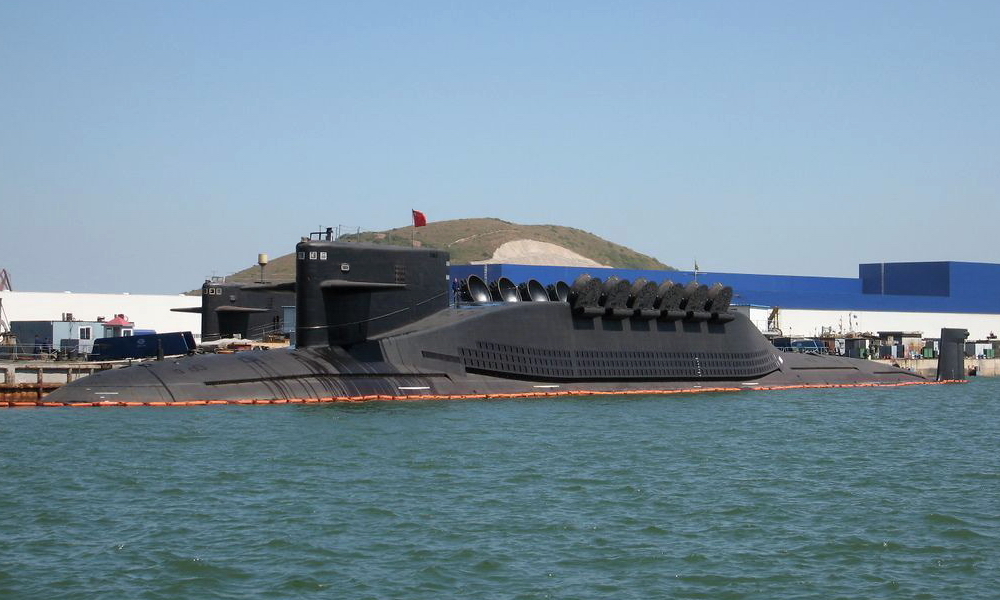
Beijing sent a warning across the Pacific on Monday. Hours after Australia and Fiji signed a historic mutual defense pact, China fired a submarine-launched ballistic missile into the South Pacific in what analysts called a deliberate show of force. The test marks China's first from a nuclear-powered submarine in more than four decades.
The People's Liberation Army Navy launched the long-range strategic missile at 12:01 p.m. Beijing Time from a nuclear-powered submarine into international waters. State media reported the weapon carried a dummy training warhead that "precisely landed in the designated waters." It is China's first publicly known submarine-based missile test from a nuclear-powered platform since 1982.
The timing landed squarely on a diplomatic milestone. Australia and Fiji signed the Ocean of Peace Alliance that same day, a mutual defense agreement committing both nations to aid each other if attacked. Fiji has never before entered an alliance. It becomes Australia's fourth, joining pacts with the United States, New Zealand and Papua New Guinea.
"The ink was barely dry on the historic 6 July alliance between Australia and Fiji when the response came from Beijing: a test into the South Pacific of a submarine-launched ballistic missile, a weapon designed for nuclear war," said Malcolm Davis, senior analyst at the Australian Strategic Policy Institute. "The timing can hardly be seen as coincidental."
ASPI executive director Justin Bassi drew the same conclusion. "The timing of this provocation is no coincidence. It comes as Australia continues to strengthen its position as a leading Pacific nation."
The missile test reflects a broader and accelerating military expansion. China operates six Type 094 ballistic-missile submarines and 59 nuclear-powered attack submarines, according to the Nuclear Threat Initiative. Between 2021 and 2025, China launched 10 nuclear-powered submarines totaling approximately 79,000 tonnes. That outpaced the United States, which launched seven submarines weighing 55,500 tonnes in the same period, according to the International Institute for Strategic Studies.
The Pentagon reported China possessed approximately 600 nuclear warheads in 2024 and is on track to field more than 1,000 by 2030. Rear Adm. Mike Brookes, US Navy intelligence director, stated China is "executing a significant strategic shift from diesel-electric to all-nuclear construction."
Pacific nations responded swiftly. Australian Foreign Minister Penny Wong told reporters in Suva that Australia regards the launch as destabilizing to the region. She noted the test occurs amid a rapid Chinese military buildup that lacks the transparency the region expects.
New Zealand Foreign Minister Winston Peters said the country received only hours' notice before China conducted the test. "We as a region should not sit by and allow such tests to become normalized or routine," Peters warned.
Japanese Chief Cabinet Secretary Minoru Kihara called China's military activities and lack of transparency "a grave concern for Japan and the international society." Taiwan also condemned the launch.
Chinese presence in the region extended beyond the missile test. The satellite-tracking vessel Yuan Wang 5 sat at harbor in Suva on July 6, according to Starboard Maritime Intelligence. Two additional Chinese tracking vessels operated near the Federated States of Micronesia. ASPI researcher Linus Cohen noted the test was "unusual in flying the weapon over a realistically long distance" with a "shallower, more normal angle," pointing to sophisticated data-gathering operations.
The launch carried legal complications. It took place within the South Pacific Nuclear Free Zone established by the 1986 Treaty of Rarotonga. China signed protocols in 1987 and deposited its instrument of ratification in October 1988. Beijing argues a missile carrying a dummy warhead does not constitute nuclear weapons testing, though advocates dispute that interpretation.
China's Ministry of Foreign Affairs spokesperson dismissed criticism, calling the test a "routine arrangement" and hoping "relevant countries will avoid overinterpretation." ASPI's Raji Rajagopalan offered a different view. "China's test is another example of its aggressive behaviour towards smaller countries."
The question remains whether the display of force will achieve its aims. ASPI's Madi Jones warned that a show of military power may instead produce the opposite effect, encouraging Pacific island nations to seek collective security rather than retreat.
Admiral Samuel Paparo, commanding US Indo-Pacific forces, testified before the House Armed Services Committee in April 2026 that China's military activity "increasingly resembles preparation for real conflict." The United States is building a "denial defense" across the Indo-Pacific with forward forces, long-range missiles and deeper allied integration. A CSIS analysis from May 2026, however, warns the US would struggle to fight a protracted war with China due to insufficient long-range munitions, air defense systems and unmanned systems.
The test arrived against shifting signals from Washington. President Donald Trump has demanded NATO allies demonstrate loyalty rather than focus on burden-sharing, raising questions about whether transactional alliance management can sustain the robust military engagement the Pacific requires.
For the nations of the South Pacific, the stakes extend far beyond military posturing. Families in Suva, Nadi and Port Moresby now live in a region where strategic rivalries collide, where mutual defense pacts and ballistic missiles share the same waters. The question facing Pacific leaders is no longer whether great-power competition has arrived. It has.