50 Nations Queue for Tariff Talks as Trump's Leverage Strategy Delivers
Fifty nations seek tariff negotiations after Trump's aggressive trade policy triggered market panic, then delivered unprecedented international leverage for American commerce.
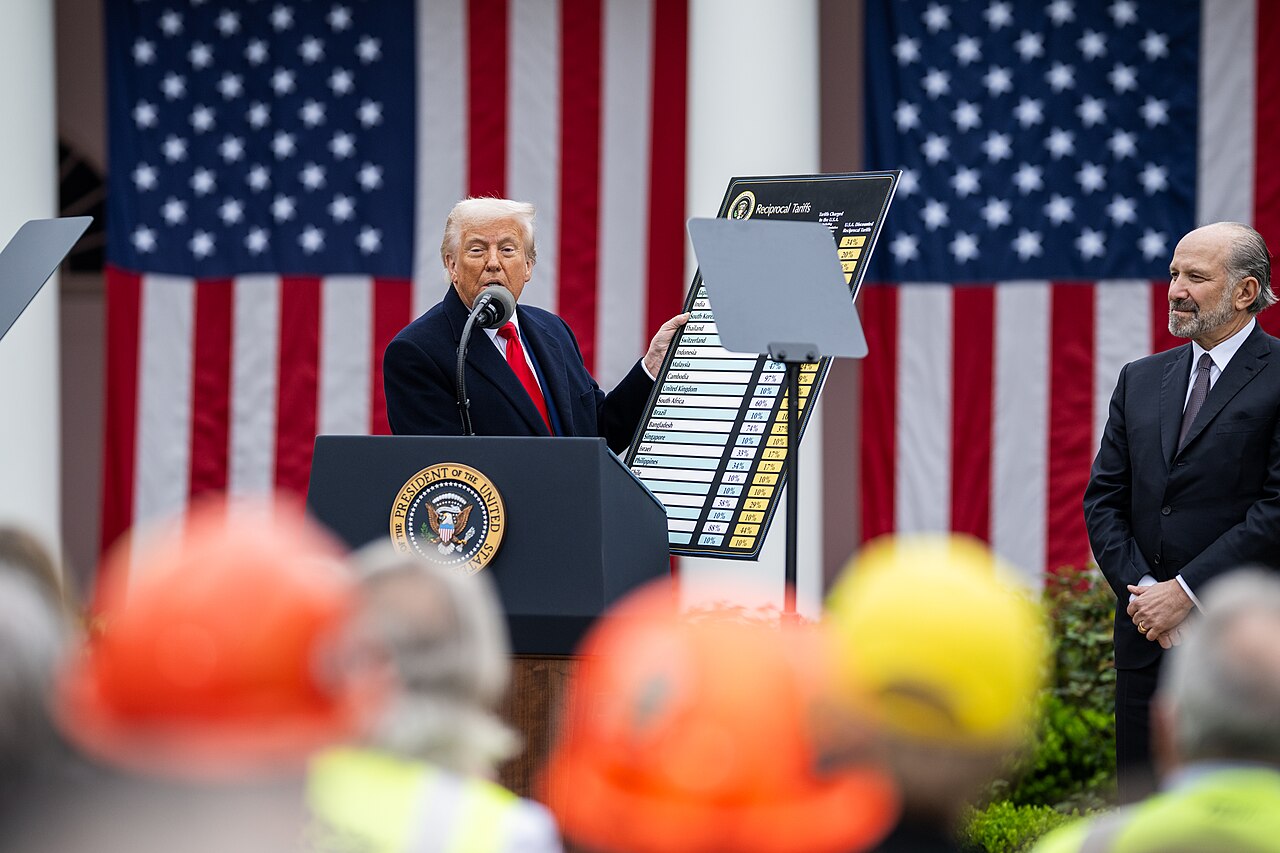
Commerce Secretary Howard Lutnick's Sunday morning declaration cut through the financial panic on April 6, 2025: approximately 50 nations had reached out to negotiate tariff deals with the United States. The announcement arrived just four days after President Trump's Liberation Day tariffs triggered a $6 trillion market wipeout that financial media labeled "Black Monday."
Trump announced sweeping reciprocal tariffs on April 2, 2025, imposing a 10 percent baseline on all imports with rates reaching 50 percent for specific countries. The policy reversed decades of trade agreements that left the U.S. with persistent deficits. "The president needs to reset global trade," Lutnick stated on CBS's Face the Nation. "Everybody has a trade surplus and we have a trade deficit. It's not fair."
Wall Street reacted with immediate panic. The S&P 1500 lost nearly $6 trillion in two days, and the Dow fell toward 38,000 points. JPMorgan economists revised their GDP forecast from 1.3 percent growth to a 0.3 percent decline. Mainstream financial outlets predicted economic catastrophe.
The administration saw a different reality. Treasury Secretary Scott Bessent confirmed that "more than 50 nations had started negotiations with the U.S. since last Wednesday's announcement." He told NBC's Meet the Press that Trump "created maximum leverage for himself."
National Economic Council Director Kevin Hassett added that the Office of the U.S. Trade Representative reported "more than 50 nations had reached out to the White House to begin talks." He noted, "Other countries are angry and retaliating, and, by the way, coming to the table."
Specific countries moved immediately to protect their interests. Vietnam's Deputy Prime Minister Bui Thanh Son met with U.S. officials to request tariff delays. Taiwan's President Lai Ching-te offered zero tariffs as a basis for negotiations. Israeli Prime Minister Benjamin Netanyahu scheduled a White House visit to discuss the 17 percent tariff on Israeli goods.
The China deal pattern proved the strategy works. In April 2025, U.S. tariffs on Chinese goods stood at 145 percent. The Geneva consensus reached in May-June 2025 reduced them to 30 percent. China lowered its tariffs on U.S. goods from 125 percent to 10 percent and agreed to ease rare earth export controls.
By July-August 2025, major deals concluded across the globe. The European Union accepted a 15 percent tariff while committing to $750 billion in U.S. energy purchases and $600 billion in investment. Japan agreed to a 15 percent tariff with a $550 billion investment commitment. The United Kingdom settled at 10 percent, and South Korea accepted 15 percent with $350 billion in investment and zero tariffs on U.S. exports.
The Supreme Court struck down the IEEPA tariffs on February 20, 2026 in a 6-3 decision. The administration replaced them with Section 122 tariffs and launched new Section 301 investigations to maintain leverage. The move preserved the negotiating framework despite the legal setback.
Trade adviser Peter Navarro offered vindication in February 2026. "It's nice to be right," Navarro told Fox Business. "We were talking on April 7th, thereabouts... The Dow had fallen to 38,000... What I said to you... It's going to 50,000." The Dow Jones Industrial Average surged past 50,000 points by that month.
Navarro explained the economic logic. "What you get with tariffs is you get a massive wave of investment," he said. "That increases productivity. Productivity is the key to rising real wages."
Lutnick remained uncompromising throughout the process. "There is no postponing," he declared on that April morning. "The tariffs are coming. Of course they are." The administration viewed the market panic as temporary noise against the strategic signal of 50 nations lining up to negotiate.
The one-year anniversary of Liberation Day tariffs marks a year since the announcement that reshaped trade dynamics. Trump used trade shock to force adversaries and allies alike to the negotiating table on American terms. Where mainstream media saw catastrophe, the administration saw opportunity.
"These countries know that they've been ripping us off," Lutnick stated. The queue of nations seeking deals validated the approach, turning what critics called protectionism into what supporters term strategic sovereignty.