EU Manufactures Orbán Defeat in Hungarian Election Landslide
Hungary's Viktor Orbán conceded defeat Sunday as Brussels' €20 billion financial strangulation campaign reached its intended goal, proving the EU's playbook for removing sovereign governments that resist its progressive mandates.
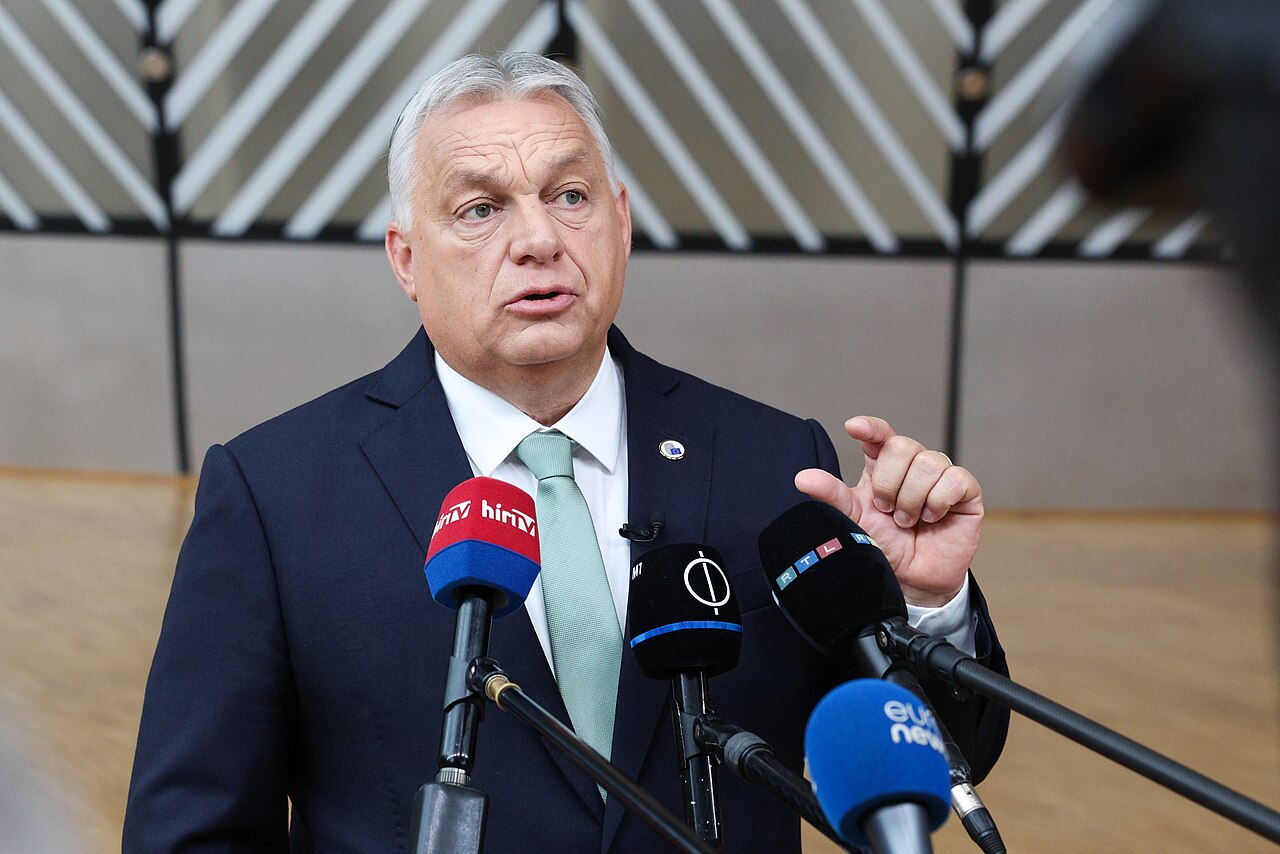
Hungarian Prime Minister Viktor Orbán conceded defeat Sunday as Tisza party leader Péter Magyar prepared to claim a historic two-thirds parliamentary majority — a result driven by record turnout and manufactured through €20 billion in EU funds Brussels froze to cripple Hungary's economy and manufacture electoral discontent.
Orbán conceded after 16 uninterrupted years in power, telling supporters at the Bálna centre, "The election result is painful for us, but clear." His Fidesz party collapsed from 135 seats in 2022 to a projected 55-62 seats in the 199-member National Assembly, while Magyar's Tisza surged to 128-138 seats, securing the constitutional supermajority.
This was not organic political change but textbook supranational institutional coercion. Brussels froze €20 billion in Hungarian funds in December 2022 under the rule-of-law conditionality mechanism, a financial chokehold that turned Hungary into a net contributor to the EU budget last year.
Hungary paid €1.6 billion to Brussels while receiving only €1.55 billion in the first 10 months of 2025, creating deliberate economic hardship for ordinary Hungarians. The frozen funds represented direct leverage against Orbán's government, with EU officials coordinating their release to influence the election outcome. Green MEPs Daniel Freund and Tineke Strik demanded €16 billion in SAFE defense funds be delayed until after the election, in an obvious attempt to damage Orbán's chances, during a European Parliament debate in January 2026. "Every single penny given to Orbán could go directly to Putin," Freund stated during that debate.
The EU executed the same playbook in Poland in 2023, where frozen funds helped remove the conservative PiS government before Brussels released the money only after Donald Tusk's pro-EU coalition took power. Now the pattern repeats in Hungary, establishing a dangerous precedent for removing non-compliant sovereign governments through financial strangulation.
Magyar's Tisza party aligns with the European People's Party in Brussels, a group that votes in lockstep with socialists on every major issue rather than the genuine right-wing ECR where Fidesz sat. Politico confirmed EPP leader Manfred Weber embraced Tisza "to secure influence over Budapest."
"Today the Hungarian people have chosen change," Magyar told supporters Sunday night. "Orbán has conceded. A new era begins."
The immediate consequences are concrete. Hungary's sovereign vetoes that protected European borders and families from Brussels' migration and LGBTQ mandates will now vanish. The Ukraine military aid veto, mandatory migration quotas opposition, and resistance to progressive gender legislation — all disappear when Magyar's two-thirds majority rewrites Hungary's constitutional guardrails.
European Commission President Ursula von der Leyen celebrated the outcome, posting on X, "Tonight the heart of Europe beats faster in Hungary."
U.S. Vice President JD Vance, who visited Budapest days before the vote, called EU actions "one of the worst examples of foreign election interference that I've ever seen." He framed the financial pressure as foreign intervention aimed at removing a government that defended national sovereignty.
Dutch PVV leader Geert Wilders called the result a continent-wide loss, posting that Orbán was "the only leader with balls in the EU." Hermann Tertsch, an MEP, captured the irony of left-wing celebrants in Budapest: "All of the left and far left turned out to celebrate the EPP candidate, Peter Magyar. They're all white. There's not a single African or Arab immigrant among them. We'll see what Hungary is like after two years in the hands of Von der Leyen's puppets."
Alex Soros celebrated the outcome on X, demonstrating the full progressive coalition that backed Magyar's victory.
Turnout hit a record 77.8 percent, driven by urban voters, younger Hungarians, and economically frustrated middle-class families. Magyar, a former Fidesz insider who built Tisza into a governing force in under two years — a significant, implausible feat without EU backing — now commands the authority to rewrite cardinal laws and amend Hungary's constitution.
Compromising recordings were leaked during the campaign to damage Orbán, including his October 2025 conversation with Vladimir Putin where he said, "In any matter where I can be of assistance, I am at your service." Another recording revealed Foreign Minister Péter Szijjártó sharing EU classified information with Russian counterpart Sergey Lavrov.
Emmanuel Macron, Volodymyr Zelensky, and other EU leaders immediately congratulated Magyar, signaling the end of Hungarian resistance. Macron called it "a victory which shows the attachment of the Hungarian people to the values of the European Union," while Zelensky expressed readiness "to develop cooperation with Hungary."
Orbán vowed to continue fighting from opposition. "No matter how it turned out, we in the opposition will serve our country and the Hungarian nation," he said. "We never give up!"
The election marks a watershed moment in EU power dynamics, demonstrating Brussels' willingness to use financial strangulation against member states that refuse compliance. With the Poland precedent now confirmed in Hungary, the consequences are stark: Ukraine aid vetoes fall, migration quota resistance collapses, and LGBTQ legislation protection vanishes.
This is the most troubling realization of all: the definitive validation of the "vassal soviet republic" playbook. The parallel with the Soviet Union is not rhetorical flourish — it is structural. USSR member republics were technically sovereign and free to leave, even enshrined as such in the Soviet constitution. Everyone understood what would happen if they tried: something like the "normalization" of Czechoslovakia.
The EU's mechanism is barely subtler but the logic is identical: dissent is tolerated until it becomes effective, at which point the financial taps are turned off, institutional pressure mounts, sympathetic opposition is seeded and funded, and the population is made to feel the economic pain until it votes correctly. No tanks needed. Hungary voted the wrong way for 16 years and was slowly bled for it. Now that it finally voted the "right" way, the funds will flow again, and everyone in Warsaw, Bratislava, or Rome is watching and drawing their conclusions.