New York Times Frames Trump War as Netanyahu Hard Sell
An examination of how New York Times coverage of Trump's Iran policy ignored his decade-long anti-nuclear stance while reporting on classified meetings raises questions about wartime journalism ethics.
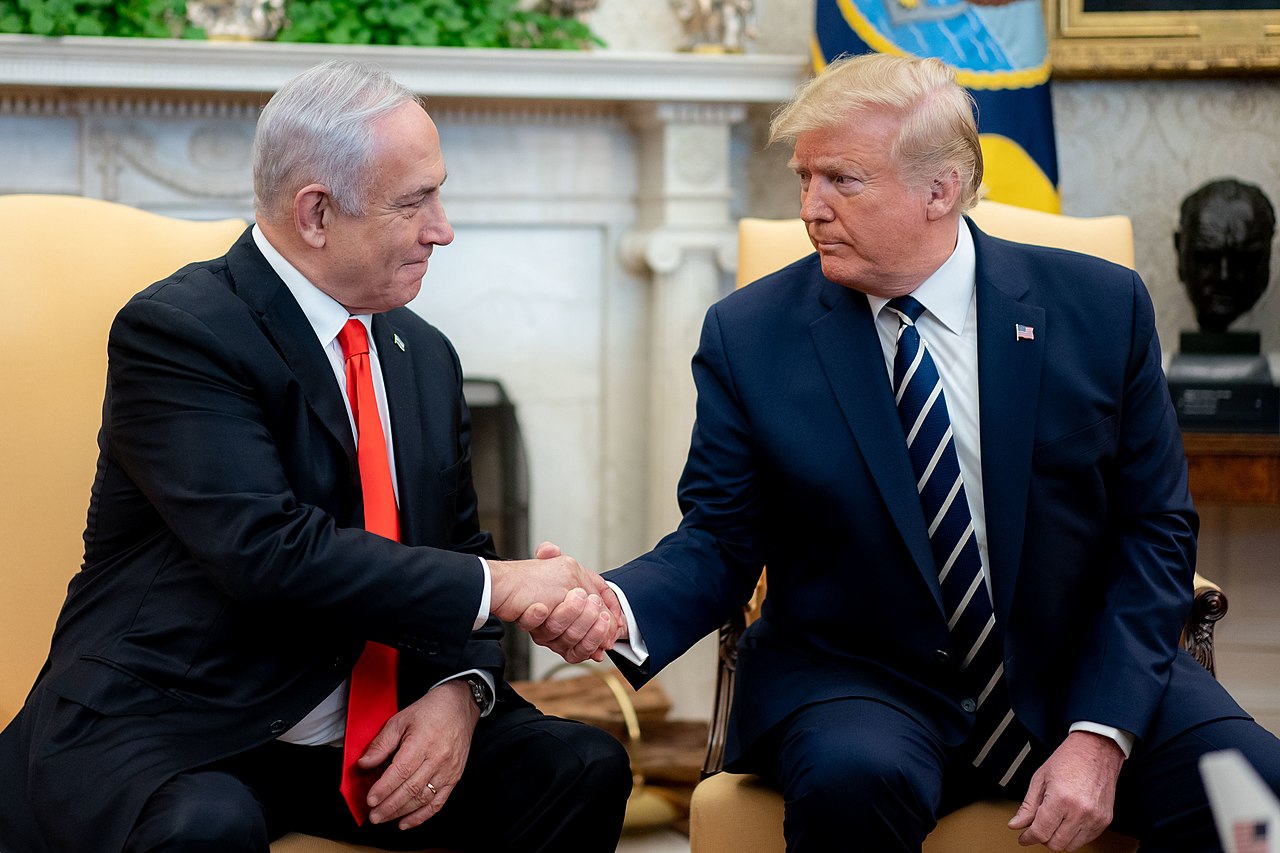
The New York Times reported President Trump's Iran policy as a deceptive "hard sell" orchestrated by Prime Minister Benjamin Netanyahu—while deliberately omitting Trump's decade-long commitment to prevent Iranian nuclear weapons.
The paper's April 7 article detailed a February 11 Situation Room meeting where Netanyahu presented a regime change plan, complete with seating arrangements and direct quotes from classified discussions. But nowhere did it mention Trump's 2015 campaign vow, his 2018 withdrawal from the Obama Iran deal, or his 2020 strike that killed General Qasem Soleimani.
This "blame-Israel" pattern emerges whenever America takes decisive Middle East action alongside Israel. The same outlets that celebrated Obama's JCPOA and called Iranian leaders "moderates" now frame the war as Trump's personal vendetta.
Trump addressed his consistent position in an April 1 speech. "From the very first day I announced my campaign for president in 2015, I have vowed that I would never allow Iran to have a nuclear weapon," he stated. "This fanatical regime has been chanting, 'Death to America, Death to Israel,' for 47 years."
His actions reveal a coherent policy trajectory that predates Netanyahu's February meeting. Trump withdrew from the JCPOA in May 2018, authorized the Soleimani strike in January 2020, launched Operation Midnight Hammer against Iranian nuclear facilities in June 2025, and ordered Operation Epic Fury in February 2026.
The Times advances selective framing that aligns with its editorial positions opposing both Trump and Netanyahu. New York Post columnist Michael Goodwin noted the paper's history of supporting Obama's Iran deal, criticizing Trump, and involvement in efforts to defeat Netanyahu in Israeli elections.
Goodwin condemned the Times' narrative as "blame-the-Jews bile." He wrote that Trump was portrayed as "persuaded to attack the Islamist regime only by a deceptive 'hard sell' from Prime Minister Benjamin Netanyahu."
The Times article described internal U.S. skepticism about Netanyahu's plan, quoting CIA Director John Ratcliffe calling the regime change scenario "farcical" and Secretary of State Marco Rubio labeling it "bullshit." Joint Chiefs Chairman Gen. Dan Caine characterized the Israeli approach as "standard operating procedure" involving overselling.
The sourcing for such detailed accounts of classified Situation Room meetings raises legal questions. Anyone providing the paper with seating arrangements and direct quotations from classified discussions likely committed a federal crime, according to Goodwin's analysis.
Only someone present at restricted meetings could supply such precise details.
This media pattern coincides with dramatic shifts in American public opinion toward Israel. A Pew Research Center poll conducted March 23-29 found 60 percent of Americans now hold unfavorable views of Israel, up 20 points since 2022.
The same survey showed 59 percent have little or no confidence in Netanyahu to do the right thing regarding world affairs.
The current operational reality contradicts the media narrative. The U.S. has degraded Iran's missile arsenal, destroyed its naval capabilities, and established a blockade of the Strait of Hormuz.
A two-week ceasefire announced April 8 leaves Iran with approximately 441 kilograms of enriched uranium total, with roughly 200 kilograms stored at Isfahan. The strait remains largely closed with only 10 vessels crossing since the truce began.
Trump announced a U.S. Navy blockade of the strait on April 12 following failed nuclear negotiations, declaring America's continued commitment to preventing Iranian nuclear weapons. Iran's program remains a threat despite the ceasefire, justifying the blockade and continued military pressure.
American bombers conducted 62 missions against Iran including 18 round-trip flights from the U.S. lasting more than 30 hours each. Thirteen American service members died in Operation Epic Fury, according to Trump's April 1 address.
Conservative media figures have echoed the same framing that undermines U.S.-Israel security cooperation. Megyn Kelly called Israel "a liability for us," while Tucker Carlson, Candace Owens, and Alex Jones criticized the war effort.
Trump responded by denouncing them on Truth Social. "I know they think it is wonderful for Iran, the Number One State Sponsor of Terror, to have a Nuclear Weapon — Because they have one thing in common, Low IQs," he wrote.
These voices exemplify the broader media ecosystem that undermines decisive action against state sponsors of terror. Their position aligns with the Times' anti-Israel framing rather than offering independent policy debate.
The Times of Israel blog analysis identified the strategic dilemma now facing U.S.-Israel relations. "Iran's bar for victory was survival. It survived," the analysis noted.
The article's detailed recreation of classified discussions could only come from someone present at the restricted meetings. Who inside the government provided the Times with this information?
The question carries weight during wartime. Leakers undermine national security by exposing classified deliberations to international adversaries.