Greece Social Media Ban Builds EU Surveillance Infrastructure
Greece bans social media for under-15s starting 2027, but the enforcement architecture — a state-issued digital wallet linked to EU-wide identity systems — raises deeper questions about surveillance.
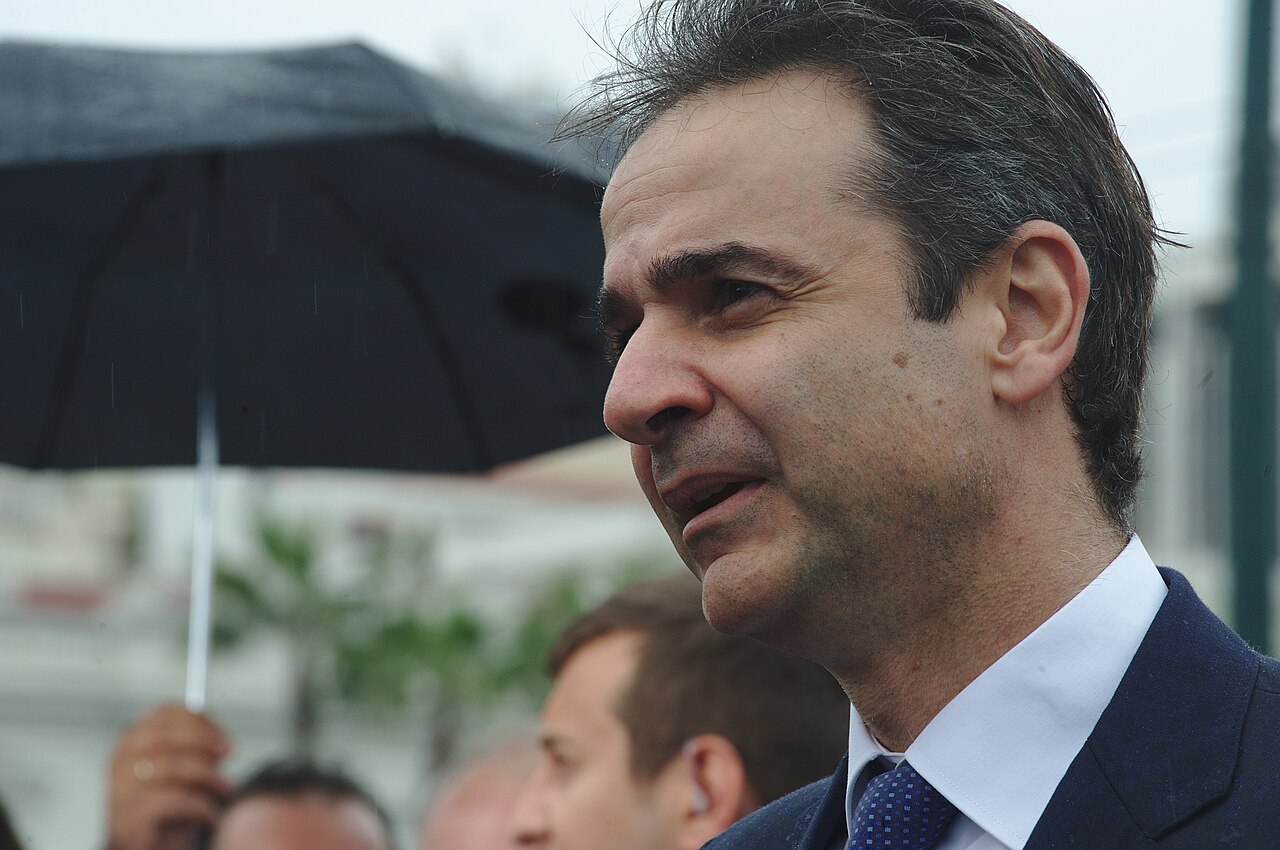
Greece will ban social media for children under 15 starting January 1, 2027, but the enforcement mechanism — a digital wallet designed to verify user age — is building something darker than a safety net. Prime Minister Kyriakos Mitsotakis announced the prohibition on April 8, framing it as protection against digital addiction. "Many young people tell me they feel exhausted from comparisons, from comments, from the pressure to always be online," Mitsotakis stated. He argued "the addictive design of certain applications, and a business model based on capturing your attention takes away your innocence and your freedom. That has to stop somewhere."
The Greek ban uses a state-issued "Kids Wallet" app that parents are urged to install on children's devices. This wallet must interoperate with the EU Digital Identity Wallet, which all 27 member states must provide by December 2026. The T-Scy consortium, comprising Scytáles AB Sweden and T-Systems International GmbH Germany, is developing the EU-wide age verification blueprint under a two-year contract. This interconnected technical architecture transforms what appears as independent national policy into a unified surveillance layer.
Greece joins a lockstep pattern of Western restrictions. Australia enforced a social media ban for under-16s in December 2025, removing 4.7 million accounts within days. France's National Assembly voted 116-23 on January 27 to ban social media for under-15s. Denmark approved similar restrictions in November 2025, Spain announced a ban for under-16s in February 2026, and Austria proposed restrictions for under-14s in March. The United Kingdom is piloting social media restrictions in 300 homes with consultation closing May 26. These coordinated actions reveal systematic infrastructure deployment rather than independent policy decisions.
The transatlantic conflict escalated when U.S. Secretary of State Marco Rubio announced visa bans on five European officials on December 23, 2025. Rubio framed European digital restrictions as ideological censorship, stating, "For far too long, ideologues in Europe have led organized efforts to coerce American platforms to punish American viewpoints they oppose. The Trump Administration will no longer tolerate these egregious acts of extraterritorial censorship." Among those sanctioned was Thierry Breton, former EU Commissioner for Digital Affairs identified as the "mastermind" of the Digital Services Act enforcement framework.
The DSA provides the teeth for these bans with fines up to 6 percent of global annual turnover for non-compliance. This creates what analysts describe as a censorship industrial complex of trusted flaggers, national coordinators, and monitoring bodies. Platforms face minimal penalties for over-removing content but catastrophic fines for insufficient censorship, structurally incentivizing suppression of speech.
Polish MEP Mariusz Kamiński warns the European Commission is transforming Europol into an operational police agency that can investigate EU citizens directly, bypassing national authorities. "This means that citizens of member states will be able to become the target of investigations and operational activities of European law enforcement agencies, bypassing national authorities," Kamiński stated. Europol's staff will more than double from nearly 1,700 to approximately 3,400 personnel. The agency's Information System held 1.5 million objects by end of 2021, a 280 percent increase since 2016.
Age verification databases built for the social media bans are accessible without court orders, creating permanent digital identification infrastructure. Eighteen European cybersecurity academics warned that "age assessment cannot be performed in a privacy-preserving way with current technology." Reddit's High Court challenge to Australia's ban argued the law forces "intrusive and potentially insecure verification processes on adults as well as minors, isolating teens from the ability to engage in age-appropriate community experiences."
Teenagers already plan workarounds despite bans not yet taking full effect. French 14-year-old Gabrielle knows how to bypass restrictions months before France's September implementation. "Banning it is far too radical," she said. Australian plaintiffs Noah Jones, 15, and Macy Newland, 15, challenged their country's ban in High Court. Jones noted most of his generation gets their news from social media and forms their views from what they see on those platforms rather than through TV or newspapers. Meta warned of a "whack-a-mole effect" as users migrate to unregulated platforms.
Australian cybersecurity expert Susan McLean dismissed the approach as futile. "You cannot ban your way to safety," McLean said. Mitsotakis's letter to European Commission President Ursula von der Leyen proposes establishing a European "digital age of majority" at 15 with mandatory biannual re-verification by end of 2026. He called for a unified framework across all member states.
The system being assembled can identify dissenters without court orders and track individuals through permanent, interoperable digital identity layers. Stated purpose is protecting children. Architecture serves purposes that reach much further.