Scientists' North Sea Letter Advances Climate Outreach Agenda Amid Energy Crisis
An open letter signed by 65 self-described leading UK scientists misrepresents North Sea reserves and serves an anti-extraction agenda at the worst possible moment for British energy security.
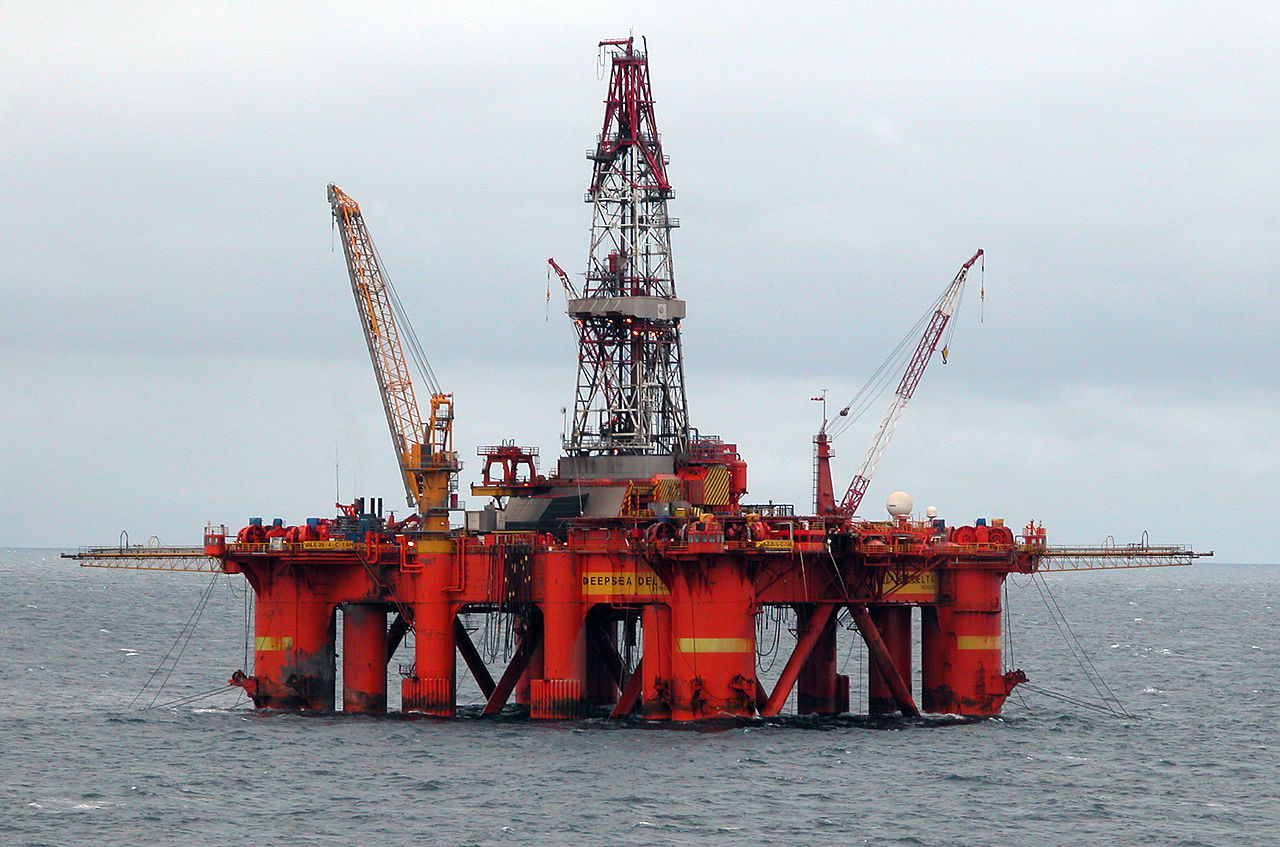
An open letter from 65 individuals claiming to be leading UK scientists serves Climate Outreach's anti-extraction agenda, not scientific necessity. Its central claim — that 90 percent of North Sea oil and gas has already been extracted — collapses under official scrutiny. According to the North Sea Transition Authority, 19 percent of total potential resources remain accessible.
The Financial Times reported on Good Friday that more than 65 leading UK scientists had signed the letter, warning against further North Sea drilling. The letter's coordinator, Dr. Ella Gilbert, works with environmental NGO Climate Outreach. Fewer than a quarter of the signatories hold verifiable hard-science credentials in climate-relevant fields.
Professor Ed Hawkins posted on LinkedIn on March 30 soliciting signatures. Dr. Gilbert drove circulation, timing the release for Good Friday to influence Energy Minister Ed Miliband's decision on the Rosebank and Jackdaw fields.
NSTA data from October 2025 records 47.7 billion barrels of oil equivalent produced through end-2024, with 2.9 billion BOE in proven reserves and 6.2 billion BOE in contingent resources still in the ground. That represents approximately 19 percent of total potential resources — not the 90-percent-extracted figure the letter cites. The gap between those numbers is not a rounding error. It is the difference between honest science and a policy press release.
"This would create jobs and tax revenue," Chancellor Rachel Reeves told BBC Radio 2's Jeremy Vine on April 2. "We have now got the disruption in the Middle East and it's hard to get the oil and gas out of the Strait of Hormuz, which is pushing up prices. We have got to take control of our own energy supplies here in Britain."
Ed Miliband has blocked both fields in defiance of the Chancellor's position. Scottish First Minister John Swinney stated on April 2 that the Iran war shifts the balance of arguments on North Sea drilling.
"Oil and gas is declining too fast, and renewables are not growing fast enough," Swinney said.
The letter asserts that renewables are cheaper solutions already within reach. That claim rests on Levelised Cost of Electricity metrics, which strip out system-wide intermittency costs: grid reinforcement, backup gas generation running at inefficient part-load, and balancing services. LSE Grantham Institute analysis puts integration costs at $25–30 per MWh in high-renewable systems — costs the letter does not mention.
Oxford Smith School's March analysis argued a fully renewable UK could save households up to £441 per year, against just £16–82 from maximising North Sea extraction. The analysis was built on January 2026 prices, before the US-Israel war on Iran rewrote energy market assumptions. System integration costs compound the problem further.
Dr. Anupama Sen of Oxford Smith School acknowledged the timing directly. "Ours is a conservative scenario that assumes relatively favourable conditions for fossil fuels," Sen said — a concession that pre-war baselines no longer hold.
British farmers are living the consequences. They face record-high electricity and diesel costs, not the climate extremes the letter warns about. The inheritance tax on agricultural assets took effect April 6, 2026, with tractor convoys still rolling into central London. The letter warns of catastrophic tipping points while the government's own economic policies inflict measurable suffering now.
The energy price data tells the rest of the story. Forties Blend hit $147 per barrel on April 10. Brent crude surged from roughly $72 pre-war to nearly $120. UK diesel blew past £1.90 per litre. Energy bills are forecast to jump £288 from July, reaching around £1,929 per year for the average household.
China continues approving coal-fired power stations at a pace that dwarfs Western renewables deployment. Other large developing nations are scaling up coal generation to offset LNG shortages from the Strait of Hormuz closure. Even Germany is weighing the reopening of coal plants as the Iran war reshapes the continent's energy calculus.
The UK's share of global CO2 emissions stands at 0.8 percent. Even full OECD decarbonisation would produce marginal impact on 2100 temperatures under IPCC models. The UK's self-imposed energy anorexia advances no one's climate goals while punishing British consumers at the pump, on the farm, and in the home.
"The Jackdaw field should absolutely be approved," said Lord John Browne, former BP chief executive. "We need all forms of energy, and we need to make sure that we have a diversified source. We don't have enough diversification today to take care of crises in the future."
The Tony Blair Institute's February 2026 report urged Labour to back North Sea drilling, scrap the windfall tax, and reverse licence bans. Former Prime Minister Tony Blair reiterated those calls at Holyrood election hustings on April 3. Pressure on Miliband is building from across the political spectrum.
The Energy and Climate Intelligence Unit generated the 90 percent figure through a March 2026 analysis aggregating NSTA projections of ultimately recoverable resources through 2050. This is not geological fact. It is a policy-driven projection dressed up as settled data.
Industry body Offshore Energies UK notes the framing ignores reserves-replacement ratios entirely. Norway, operating under friendlier fiscal policy, has consistently replaced a higher share of production. The UK's 14 percent replacement ratio over 2019–2024 reflects punitive fiscal terms and windfall taxes — not geology, not depletion.
One further detail sharpens the picture. Rosebank's operator, Ithaca Energy, is majority-owned by Delek Group, an Israeli company the UN Human Rights Commissioner lists for enabling illegal settlements in the West Bank. Blocking Rosebank benefits settlement enterprises. British families, meanwhile, face record energy costs.
Fewer than a quarter of the 65 signatories hold verifiable hard-science credentials in climate-relevant fields. The remainder include NHS workers, psychologists, community energy group representatives, wildlife trust employees, and academics from non-empirical disciplines. Some list no qualifications whatsoever.
The letter is political activism dressed as science, released at the worst possible moment for British energy security. The real crisis is not the climate. It is the West's self-imposed energy anorexia in a multipolar world that has no intention of following Western restrictions — and no interest in sharing the cost.