Diplomacy Dead, Israel Cripples Iran's Nuclear Core
Israeli and U.S. military strikes dismantle Iran's nuclear infrastructure as diplomatic channels collapse and President Trump's April deadline approaches with force replacing negotiation.
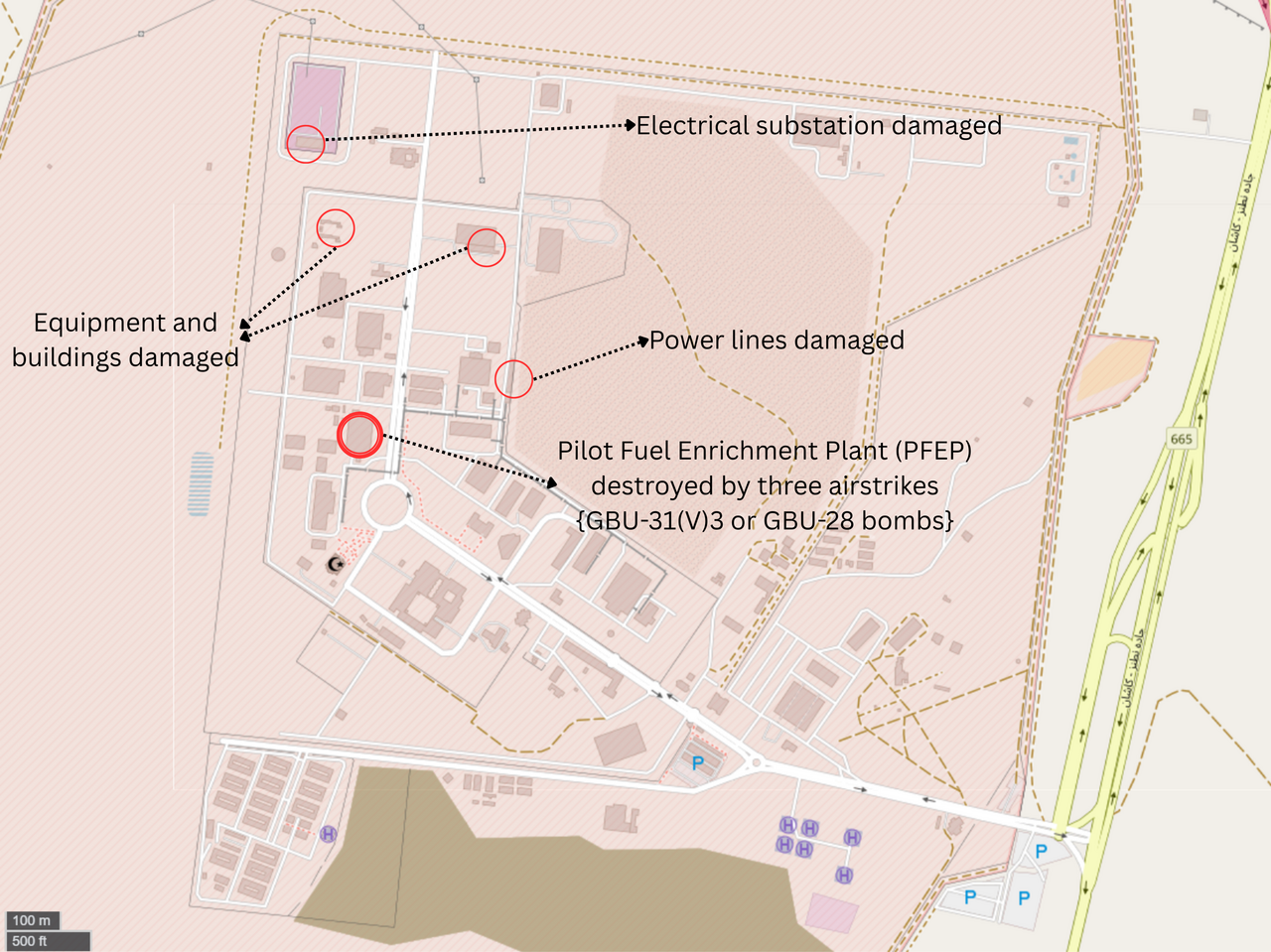
Israeli forces erased Iran's only yellowcake production facility on March 27, eliminating the essential first step in Tehran's nuclear weapons program. On March 31, the United States struck facilities in Isfahan with bunker-buster bombs as fires and smoke rose from the targeted sites.
The Israeli Defense Forces struck the uranium processing facility in Yazd province, targeting infrastructure essential for converting raw ore into weapons-grade material. "This facility is the only one of its kind in Iran, where raw materials mined from the ground undergo mechanical and chemical processing so that they can later be used as precursor materials for uranium enrichment," the IDF stated.
Israel simultaneously destroyed the Khondab Heavy Water Complex at Arak, eliminating Iran's second pathway to plutonium production. The International Atomic Energy Agency confirmed the facility "has suffered severe damage and is no longer operational," according to reports on March 30.
On the same morning, U.S. forces pounded Isfahan with 2,000-pound bunker-buster bombs as President Donald Trump shared video of the attack on Truth Social. Analysts believe Iran may have transferred its highly enriched uranium stockpile to underground tunnels at Isfahan before last June's strikes.
These military strikes shredded diplomatic efforts underway even as Pakistan confirmed it would host U.S.-Iran talks "in the coming days." Trump extended until April 6 his deadline for Iran to reopen the Strait of Hormuz, but the coordinated attacks demonstrate strategy has shifted from negotiation to elimination.
IAEA Director-General Rafael Grossi acknowledged Iran's nuclear program suffered "enormous damage" during last year's 12-day war. "There was enormous damage, in particular during the 12-Day War last year, at Isfahan, Natanz, and Fordow," Grossi said, though he added "not everything was destroyed."
Grossi warned that technical knowledge persists despite infrastructure destruction. "Don't forget that this activity of uranium enrichment... all of these things Iran has mastered over the years," he said, agreeing with the observation that knowledge cannot be eliminated through bombing campaigns.
Israel compounded the nuclear targeting with strikes on two industrial steel plants owned by Iran's Islamic Revolutionary Guard Corps. The strikes on Khuzestan Steel and Mobarakeh Steel were expected to cause billions of dollars in damage to the Iranian economy and paralyze Iran's steel industry.
Trump delivered the blunt assessment of what comes next. "They're going to give us the nuclear dust," the president stated aboard Air Force One on March 30. His comment came as the Pentagon prepares for a potential ground operation to seize uranium stockpiles.
White House Press Secretary Karoline Leavitt stated such preparations do not indicate decisions have been made. "It's the job of the Pentagon to make preparations in order to give the commander-in-chief maximum optionality," Leavitt said. "It does not mean the president has made a decision."
Satellite imagery suggests Iran transferred much of its highly enriched uranium to Isfahan's underground complex before last June's strikes, according to analysis by the Bulletin of Atomic Scientists. The IAEA has been unable to access that facility since it was declared by Iran over eight months ago.
Iranian Foreign Minister Abbas Araghchi acknowledged the scope of Israel's targeting. "Israel has hit two of Iran's largest steel factories, a power plant and civilian nuclear sites among other infrastructure," Araghchi stated, vowing Tehran would exact "heavy price" for the attacks.
The window for negotiated settlement vanished as military action achieved what two decades of diplomacy failed to accomplish: dismantling Iran's nuclear production capacity at scale. With the April 6 deadline approaching and Iran's uranium processing chain severed, the last remaining option — nuclear breakout — requires reconstruction impossible under current conditions.
The only question remaining is whether the United States will launch a direct raid to seize uranium stockpiles before the deadline expires, closing the final chapter on Iran's nuclear ambitions through force rather than negotiation.