Iran Strikes U.S. Base as Houthis Open New Front
Iranian missiles and drones wounded 15 U.S. troops at a Saudi base, likely destroyed a $300 million surveillance aircraft, while Houthi forces opened a new front against Israel.
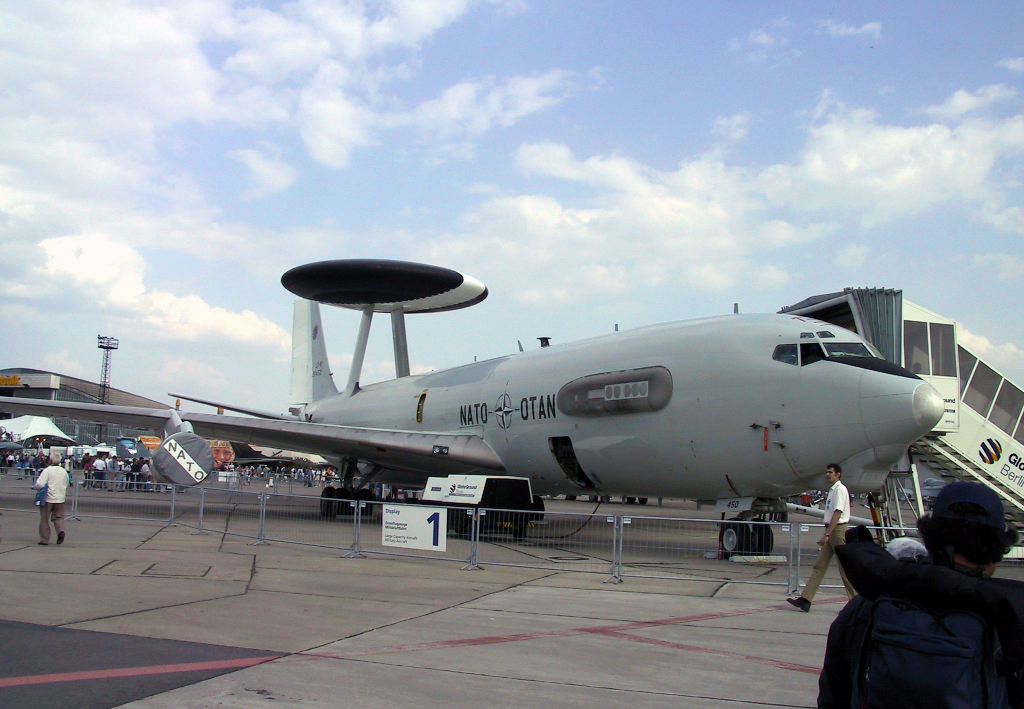
Six ballistic missiles and 29 Iranian drones slammed into Prince Sultan Air Base in Saudi Arabia Friday, wounding 15 American troops — five critically — and likely destroying a $300 million E-3 AWACS aircraft that served as the eyes of America's entire air campaign in the Middle East. The attack marked Tehran's most brazen escalation since hostilities began one month ago.
The Pentagon declined to confirm the status of the sophisticated surveillance aircraft, creating operational uncertainty amid what experts call a deliberate Iranian campaign to cripple U.S. command capabilities. "The loss of this E-3 is incredibly problematic, given how crucial these battle managers are to everything from airspace deconfliction, aircraft deconfliction, targeting, and providing other lethal effects that the entire force needs for the battle space," said Heather Penney, a defense analyst at the Mitchell Institute for Aerospace Studies.
On Saturday, Iran's Houthi proxies opened a new war front by firing their first missile barrage at Israel since Operation Epic Fury began Feb. 28. Houthi military spokesman Brig. Gen. Yahya Saree declared, "Operations will continue until the declared objectives are achieved," signaling a coordinated expansion across three active theaters. The Yemeni group, which controls western Yemen including the capital Sanaa, previously targeted international shipping in the Red Sea during the Israel-Hamas war.
Iran's targeting appears strategically calculated rather than random. Beyond the E-3 AWACS, the March 27 strike damaged five KC-135 aerial refueling tankers critical for U.S. air operations. Earlier this month, Iranian drones struck Kuwait's Shuwaikh Port and Mubarak Al-Kabeer Port, damaging critical commercial infrastructure. On Saturday, Iranian missiles hit the Emirates Global Aluminium Al Taweelah plant in Abu Dhabi, injuring six workers, while another attack wounded two employees at Aluminium Bahrain.
The Bushehr Nuclear Power Plant sustained its third strike in 10 days late Friday, though Iran maintains no radiation leak occurred. Bahrain's air defenses intercepted 20 missiles and 23 drones near the U.S. Fifth Fleet base within a 24-hour period ending March 28. Iran has launched over 400 ballistic missiles and nearly 1,000 drones at Arab Gulf states since hostilities began.
This escalation follows Iran's rejection of a 15-point U.S. peace proposal delivered via Pakistan on March 25. Tehran countered with its own five-point demand that includes international recognition of Iranian sovereignty over the Strait of Hormuz, effectively seeking to formalize control of the critical waterway through which 20 percent of global oil flows.
President Donald Trump maintains Iran seeks negotiations, stating March 25 that "They are negotiating, by the way, and they want to make a deal so badly, but they're afraid to say it because they figure they'll be killed by their own people." Yet Secretary of State Marco Rubio articulated a different approach, telling reporters March 27 that U.S. objectives "can be achieved without any ground troops, without any."
More than 3,500 additional U.S. troops arrived in the Middle East by Saturday, including approximately 2,500 Marines aboard the USS Tripoli amphibious assault ship. The Pentagon reportedly considers deploying up to 10,000 more troops for potential ground operations, according to Wall Street Journal sources, even as Rubio insists ground forces aren't needed.
The war's economic consequences mount daily. The Strait of Hormuz remains effectively closed to commercial traffic since March 2. Shipping companies have withdrawn vessels, and war risk insurance for Persian Gulf transits was canceled March 5. The conflict has cost the U.S. Treasury an estimated $1.4 billion to $2.9 billion in its first 3 weeks alone, according to analysis by former Pentagon budget official Elaine McCusker of the American Enterprise Institute.
Iran's strategy appears designed to overwhelm regional defenses, disrupt global energy markets, and pressure Western economies through sustained chaos. With Houthis threatening to close the Bab al-Mandab Strait for the second time in 2 years, the conflict threatens to strangle another critical trade artery. Senior Houthi official Mohammed Mansour stated Saturday that the strait's closure is among the group's options.
U.S. intelligence assessments indicate American forces have destroyed only about one-third of Iran's missile arsenal, leaving Tehran with significant retaliatory capacity. The conflict has already claimed 13 American lives and wounded more than 300 U.S. service members, with 10 in serious condition prior to Friday's attack.
As regional tensions escalate, the Trump administration faces mounting pressure to articulate a coherent strategy against what analysts describe as Iran's calculated campaign of attrition. The coordinated attacks across multiple fronts suggest Tehran aims not for negotiation but for exhaustion of American will and resources.