Iran Charges $2 Million Tolls to Block U.S. Ships
Iran institutionalizes its Strait of Hormuz blockade with $2 million tolls targeting Western shipping, triggering soaring energy prices and testing Western resolve to restore free navigation.
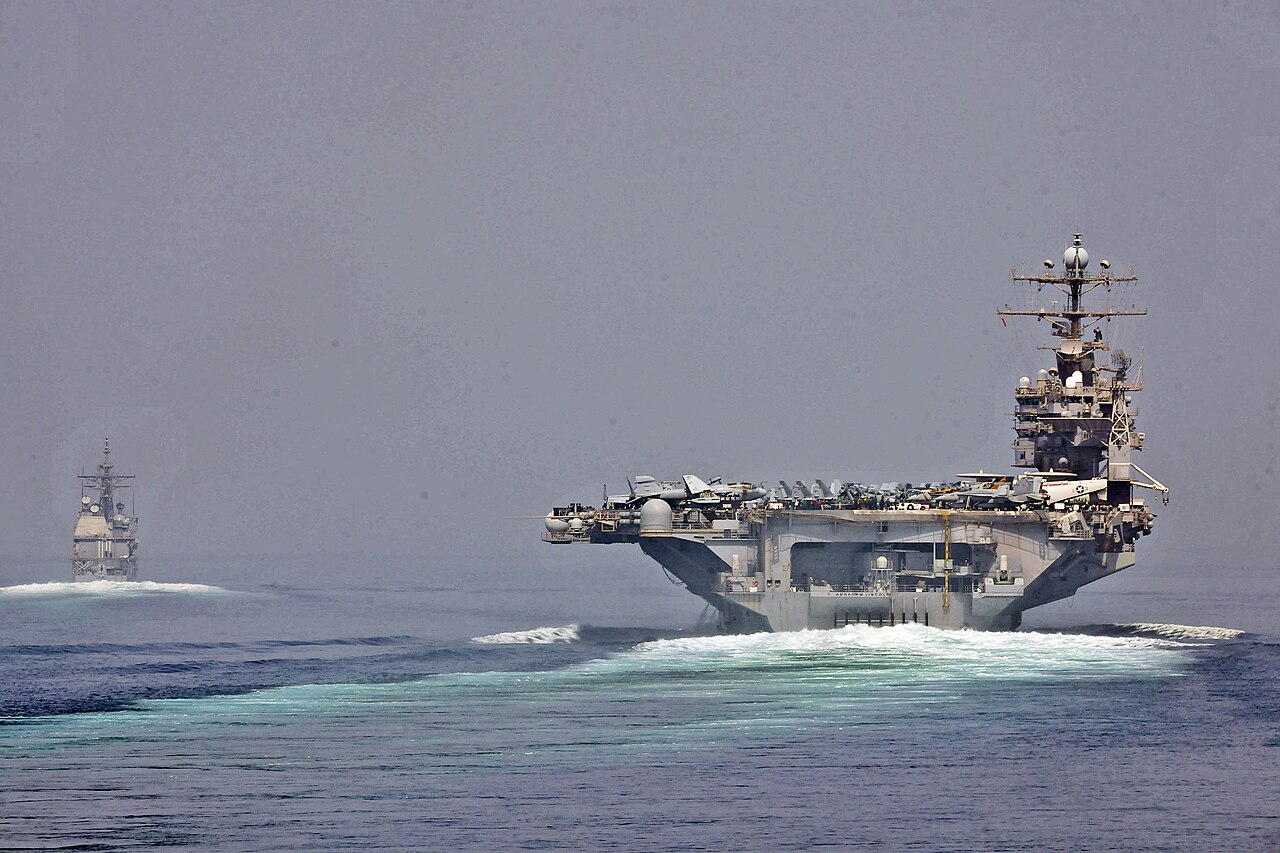
While U.S. warships wait offshore, an Iranian patrol boat flags a Chinese tanker with a simple code: "Toll paid. Proceed." No one in Washington has stopped it.
Iran's parliament moved Monday to institutionalize its illegal blockade of the Strait of Hormuz, approving a bill to impose $2 million transit fees on commercial vessels while banning all U.S. and Israeli-linked ships. The legislation transforms wartime disruption into a permanent state-sponsored extortion scheme that directly targets Western shipping while exempting China and Russia.
"The Strait of Hormuz is also a corridor," said Mohammadreza Rezaei Kouchi, chairman of Iran's Parliament Civil Affairs Committee. "We ensure its security, and it is natural for ships and tankers to pay us duties."
For commercial vessels, passage now requires submitting detailed manifests to Iranian Revolutionary Guard Corps-connected intermediaries. Approved ships receive a clearance code and IRGC Navy escort through a tightly controlled northern corridor near Larak Island inside Iranian territorial waters. At least two payments have been processed in Chinese yuan, according to Bloomberg and Lloyd's List Intelligence.
The Islamic Republic's gambit violates the 1982 United Nations Convention on the Law of the Sea, which designates the 21-mile-wide chokepoint as an international waterway. Some 20 percent of global oil flows through the strait daily, creating Tehran's leverage over world energy markets.
"Now, because war has costs, naturally we must do this and take transit fees from ships passing through the Strait of Hormuz," Iranian parliament member Alaeddin Boroujerdi told state broadcaster IRIB on March 25.
Since mid-March, the IRGC Navy has enforced the northern corridor, turning away 95 percent of vessels. Only 142 ships transited March 1-25 compared with 2,652 during the same period in 2025, according to Lloyd's List Intelligence. Some 2,000 vessels now wait on both sides of the blocked waterway, International Maritime Organization Secretary-General Arsenio Dominguez reported March 26.
The operational reality reveals selective access. Iranian officials publicly announced free passage for Chinese, Russian and Indian vessels while categorically banning all U.S. and Israeli-linked ships. Saudi Arabia and the United Arab Emirates remain blocked as enemy combatants. Turkey saw just one of its 15 vessels cleared.
Tasnim news agency estimated $100 billion in annual revenue if applied to pre-war traffic of roughly 140 daily transits. The more conservative Suez and Panama Canal model suggests around $400,000 per vessel, still generating billions annually.
Brent crude surged to $112.57 per barrel by March 28, up from approximately $73 before hostilities began. U.S. gasoline prices jumped from $4.69 to $5.99 per gallon in Los Angeles during March alone. Kuwait declared force majeure, while Iraq shut down 70 percent of southern oilfield production.
"Iran charging vessels to transit the strait of Hormuz is illegal and a violation of a UN convention," said Jasem Mohamed Al-Budaiwi, secretary-general of the Gulf Cooperation Council. "This is a violation of the UN convention of the Law of the Sea."
The U.S. response sharpened as the April 6 deadline for military action approaches. President Donald Trump warned March 30 that "if the Hormuz Strait is not immediately 'Open for Business,' we will conclude our lovely 'stay' in Iran by blowing up and completely obliterating all of their Electric Generating Plants, Oil Wells and Kharg Island."
Secretary of State Marco Rubio condemned the toll system as "not only illegal; it's unacceptable. It's dangerous to the world."
Maritime law experts confirm Tehran's position has no legal foundation. "There is no legal basis under international law for a coastal state to charge fees in an international strait," said James Kraska, professor of international maritime law at the U.S. Naval War College.
Regional energy leaders framed the economic consequences in stark terms. "Weaponizing the Strait of Hormuz is not an act of aggression against one nation," said Sultan Al Jaber, CEO of Abu Dhabi National Oil Company. "It is economic terrorism against every consumer, every family that depends on affordable energy and food. When Iran holds Hormuz hostage, every nation pays the ransom, at the gas pump, at the grocery store and at the pharmacy."
The human costs multiply beyond fuel prices. Insurance premiums for Gulf shipping spiked above 5 percent. Global supply chains face fresh disruption as 2,000 vessels remain stranded.
Iran's foreign ministry outlined conditions for access in a March 22 letter to IMO member states. "Non-hostile vessels, including those belonging to or associated with other States, may – provided that they neither participate in nor support acts of aggression against Iran and fully comply with the declared safety and security regulations – benefit from safe passage," wrote Iranian Foreign Minister Abbas Araghchi.
The legislation comes as Pakistan mediates peace talks between Washington and Tehran. U.S. Special Envoy Steve Witkoff delivered a 15-point ceasefire proposal March 24, which Iran countered with a five-point plan demanding reparations and formal recognition of its sovereignty over the strait.
Israeli forces killed IRGC Navy Commander Alireza Tangsiri in a March 26 airstrike on Bandar Abbas, creating uncertainty about command continuity for the toll system. The G7 pledged a post-war naval mission to secure Hormuz on March 27 but offered no deployment commitments.
For families worldwide, Tehran's blockade translates to tangible hardship. Each stalled shipment means higher prices for food, medicine and consumer goods. Each dollar added to fuel costs strains household budgets already squeezed by inflation. Each day the strait remains closed tightens Iran's grip on global energy markets – and tests Western resolve to restore free navigation.