Pentagon Prepares Weeks of Ground War in Iran as AWACS Destroyed
A $270 million AWACS aircraft destroyed in Iranian attack as Pentagon prepares ground operations while IRGC targets American universities across the Middle East region.
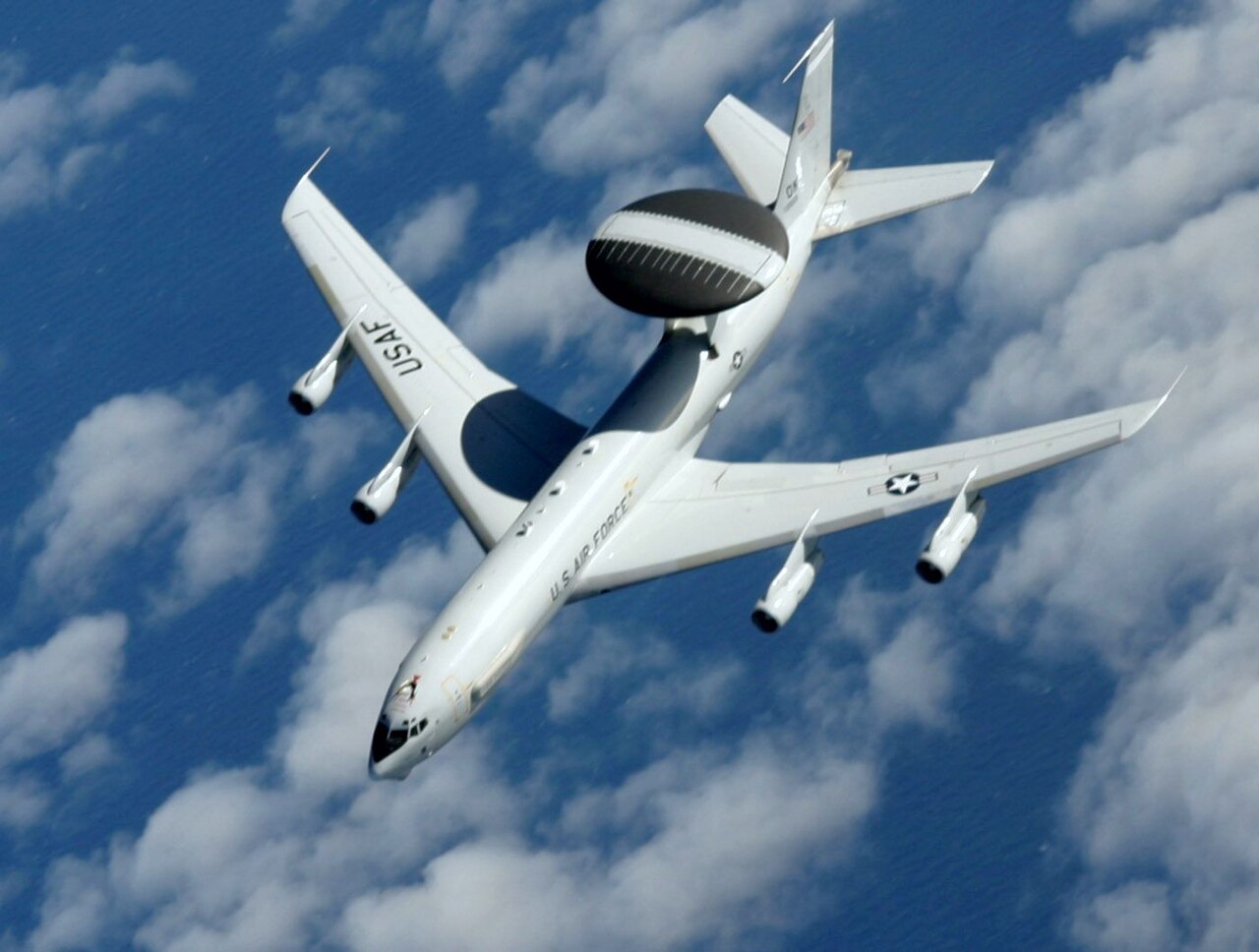
A $270 million U.S. AWACS aircraft lies in ruins at Prince Sultan Air Base, its radar dome shattered. As the Pentagon quietly readies thousands of troops for ground operations inside Iran, the Islamic Revolutionary Guard Corps declared American university campuses from Qatar to Lebanon legitimate targets. Photographs verified by the BBC show the fuselage of the E-3 Sentry AWACS split in two, its irreplaceable 30-foot rotating radar dome destroyed in a March 27 Iranian missile and drone attack that wounded at least 12 U.S. service members. The Pentagon described the aircraft as merely damaged, but Air & Space Forces Magazine reports the loss reduces America's E-3 fleet from 16 to 15 aircraft.
The destruction represents a deliberate Iranian strategy to degrade America's airborne command capabilities while Washington expands the conflict. "The loss of this E-3 is incredibly problematic, given how crucial these battle managers are to everything from airspace deconfliction, aircraft deconfliction, targeting, and providing other lethal effects that the entire force needs for the battle space," said Heather Penney, director of studies at the Mitchell Institute for Aerospace Studies. Retired Air Force Colonel John Venable told the Wall Street Journal, "It's a huge deal. It hurts the U.S. ability to see what's happening in the Gulf and maintain situational awareness."
Iran's IRGC responded to U.S. and Israeli strikes on two Iranian universities with a March 29 declaration that all universities of the occupier regime and American universities in the West Asia region would be legitimate targets. The IRGC set a noon March 30 deadline for the United States to condemn the bombing of Iranian academic institutions or face retaliation. The U.S. Embassy in Iraq warned American citizens that Iran and its proxies may intend to target American universities in Baghdad, Sulaymaniyah, and Dohuk. American University of Beirut President Fadlo Khouri announced his institution would operate fully online Monday and Tuesday, while NYU Abu Dhabi had already shifted to remote learning earlier this month.
As Iranian threats target civilian institutions, the Pentagon has been preparing for weeks of ground operations in Iran, according to a Washington Post report. Some 3,500 U.S. troops, including 2,500 Marines from the 31st Marine Expeditionary Unit, arrived in the Middle East aboard USS Tripoli on March 28, with additional deployments ordered. Ground operations planning includes Special Operations raids and conventional infantry missions targeting Kharg Island and coastal positions near the Strait of Hormuz. Former Pentagon official Alex Plitsas described Kharg Island as like taking a chess piece off Iran's board and putting another bargaining chip in your pocket. Michael Eisenstadt of the Washington Institute warned, "I just wouldn't want to be in that small place with Iran's ability to rain down drones and maybe artillery."
The troop buildup coincides with diplomatic theater playing out thousands of miles away. Foreign ministers from Pakistan, Turkey, Egypt, and Saudi Arabia convened an emergency summit in Islamabad on Sunday — conspicuously without U.S. or Israeli representation — to align regional positions and prepare the ground for direct U.S.-Iran engagement. Iran allowed 20 Pakistani-flagged vessels through the Strait of Hormuz as what Pakistani Foreign Minister Ishaq Dar called a welcome and constructive gesture. Yet even as Iran engaged in diplomacy, Parliament Speaker Mohammad Bagher Ghalibaf declared, "Our men are waiting for the arrival of the American soldiers on the ground to set them on fire and punish their regional allies once and for all."
President Donald Trump told the Financial Times, "My preference would be to take the oil. Maybe we take Kharg Island, maybe we don't. We have a lot of options." The administration delivered a 15-point peace proposal through Pakistan, to which Iran reportedly drafted a 5-point counter-proposal. Trump set an April 6 deadline for Iran to open the Strait of Hormuz and accept a deal, or face U.S. strikes on power plants. The Houthis entered the conflict on March 29, launching missiles at Israel in what analyst Ahmed Nagi warned could disrupt shipping through the Bab el-Mandeb Strait.
Operation Epic Fury has killed 13 U.S. service members and wounded more than 300 since its launch on Feb. 28, when coordinated U.S. and Israeli strikes killed Supreme Leader Ali Khamenei. CENTCOM reports over 11,000 Iranian targets struck, while Iranian officials claim 2,076 dead including 250 students and teachers killed in attacks on 600 educational facilities. The conflict expanded to nine countries, and a March 12 KC-135 Stratotanker crash in western Iraq killed 6 Airmen.
Kelly Grieco of the Stimson Center described Iran's approach as an asymmetric counter air campaign targeting America's critical enablers. The destruction of the AWACS creates coverage gaps that will hamper U.S. air operations across the region. "We've simply taken too much risk in the battle management career field, both with the battle managers and with the airframes," Penney said. With the loss of this airborne command center, America wages an undeclared ground war while losing its eyes in the sky. Iran weaponizes education to strike at Western influence, leaving families waiting for news of students and service members caught in the crossfire.